When a death occurs in a public place with a famous landmark as the backdrop, clarity depends on sticking to what investigators actually know: where the person was found, who responded, and what first responders concluded at the scene. In Anaheim, that record is straightforward—and it points to a single, bounded event near Disneyland’s south entrance, managed as a medical emergency that did not initially suggest a crime.
At a Glance
- A 65-year-old man was found unresponsive on a sidewalk near Disneyland’s south entrance off Katella Avenue and pronounced dead at the scene.
- Anaheim Police, Anaheim Fire and Rescue, and the Orange County coroner responded; the sidewalk was briefly restricted while the scene was processed.
- Police said foul play was not suspected and the death appeared to be from natural causes, pending coroner findings.
- The precise property line—resort grounds versus adjacent public sidewalk—was not resolved in early reports.
What Happened: A clear timeline and a contained scene
Anaheim Police received a report Sunday afternoon of an unconscious man near Disneyland’s south entrance along Katella Avenue. Responding officers and Anaheim Fire and Rescue arrived at approximately 1:40–1:45 p.m. at or near 800 West Katella Avenue; paramedics pronounced the man, described by police as 65 years old, dead at the scene. Officers restricted foot traffic around the sidewalk while they awaited the Orange County coroner, who took custody for examination and formal identification. This was scene management, not a prolonged criminal investigation: police directed pedestrians to alternate paths, kept the area secure, and then reopened it after the coroner concluded field procedures.
The initial police assessment focused on observable conditions: there were no signs of trauma or circumstances that pointed to a violent act. On the record, Anaheim Police Sgt. Eric Anderson said the death appeared to be from natural causes and that foul play was not suspected. That is the kind of early conclusion officers make based on training and the scene in front of them; it narrows investigative priorities without preempting the medical examiner’s final call.
Where it occurred: A high-profile location, not a complicated case
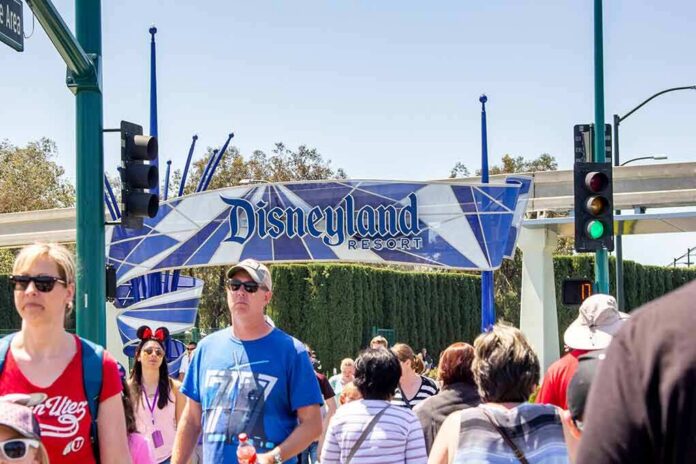
Katella Avenue forms the southern edge of the Disneyland Resort footprint; for visitors, “near the south entrance” is a familiar wayfinding phrase. Early coverage described the location adjacent to resort signage, with one outlet listing 800 West Katella Avenue. Other reporting flagged a narrow uncertainty—whether the body lay on Disneyland property or on the public sidewalk immediately alongside it. That distinction matters for property managers and insurers; it does not change the essentials of the emergency response, which unfolded on a public thoroughfare with standard coordination between police, fire, and the coroner.
Because the setting is Disneyland, stories quickly frame the event through that lens. It is the right geographic reference—Anaheim is a convention city with vast, contiguous visitor infrastructure—but it can imply a connection where none is documented. In this case the evidence supports a limited claim: a man died on or beside a sidewalk at the resort’s southern boundary. The park was not the subject of a safety investigation, and police did not report circumstances implicating the resort in the death.
Cause and manner of death: What police say versus what the coroner decides
Two determinations often get conflated in public conversation: a law enforcement assessment that “no foul play is suspected,” and a medical examiner’s cause and manner of death. Officers make the first judgment from scene conditions—visual trauma, drug paraphernalia, signs of a struggle, witness accounts. The coroner makes the second after examination, toxicology as indicated, medical record review, and, when possible, discussions with family or treating physicians. “Natural,” “accidental,” “homicide,” “suicide,” and “undetermined” are specific, formal classifications; a scene-based impression that a death appears natural is not the same as a completed medical determination.
That distinction explains the seemingly mixed phrasing across reports: police can credibly report that nothing at the scene points to a crime, while the official cause of death remains “pending.” The coroner’s process can take weeks, especially if toxicology is ordered; until that is complete, the cause is not finalized. In Anaheim, the stated absence of suspected foul play and the limited footprint of the response align with a case routed to the coroner for routine determination rather than a homicide task force.
Managing the scene: How first responders handle public-space fatalities
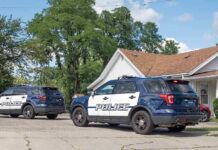
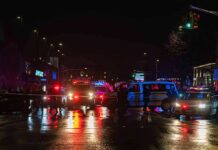
For passersby, the visible elements are stark: caution tape around a stretch of sidewalk, uniformed officers controlling flow, paramedics or firefighters clearing once lifesaving options are exhausted, and the coroner’s team performing measured, methodical tasks. This choreography has a purpose—protect dignity, preserve potential evidence, and maintain safety in a high-traffic environment. In Anaheim, officers temporarily closed the walkway, redirected visitors, and coordinated turnover to the coroner. Once field documentation and removal were complete, the area reopened. Nothing in the response profile suggested a hazard to the public or a risk that required broader closures.
One report mentioned a beer can near the body and explicitly noted that investigators had not linked it to the death. That is a textbook example of a scene detail that may be logged but has no evidentiary standing until corroborated—by fingerprints, DNA, toxicology, or witness statements. Without that link, it remains exactly what it appears to be: an object in a public place where thousands pass each day.
Dead body found near Disneyland
65-year-old man was found dead on a sidewalk outside the Disneyland Resort in Anaheim, California on Sunday, October 25, 2026. (Note: The park in Anaheim, California is Disneyland Resort, while Walt Disney World is located in Orlando, Florida)… pic.twitter.com/6kHdv08jar
— SubX.News® (@SubxNews) October 26, 2026
Why proximity to landmarks shapes perception—and why the record matters
Deaths in public spaces rarely make headlines unless they happen where the public is already looking. Disneyland is not merely a theme park; it is a metonym for safety, family leisure, and spectacle. When a death occurs nearby, the gravitational pull of the brand can overshadow the real story—an individual medical emergency and a standard multi-agency response. Responsible accounts balance the location’s shorthand value (“near the park’s south entrance”) with specificity (public sidewalk; routine coroner involvement) to prevent insinuation from outrunning facts.
The broader media pattern is familiar: early reports rely on police scene assessments for immediacy, then await the coroner’s formal cause and manner. This sequencing is not hedging; it reflects the division of labor in death investigation. Experts in forensic pathology emphasize that manner-of-death classifications are structured decisions anchored in medical findings and contextual evidence—an architecture designed to avoid over-reading what a single scene can tell you. In practice, that means preliminary police language guides public expectations without pre-judging the coroner’s role.
What it means going forward
This case will end, as most public-space fatalities do, with an official coroner ruling entered on a death certificate and filed in county records. If the initial police impression holds, the manner will likely be “natural,” reflecting disease progression rather than external causes. If toxicology or medical review suggests an accidental or undetermined pathway, the record will say so. None of those outcomes would retroactively convert the Anaheim response into a crime scene; they would simply complete the procedural handoff that began on the sidewalk.
Sources:
nypost.com, latimes.com, sandiegored.com, people.com
© fixthisnation.com 2026. All rights reserved.