In modern American campaigns, allegations about a candidate’s supposed ties to the “Muslim Brotherhood” function as a blunt political instrument: easily amplified, hard to falsify in the heat of a race, and potent enough to redefine a contest’s narrative in a single news cycle.
At a Glance
- President Trump repeatedly alleged that Michigan Senate candidate Abdul El-Sayed is a member of the Muslim Brotherhood in October 2026 campaign events and messages.
- The claims were delivered from multiple venues—White House remarks, a Michigan rally, and a targeted video to Michigan voters—signaling a coordinated message, not a one-off line.
- El-Sayed publicly denied the affiliation and disavowed the group, creating a clear on-record counter from the candidate himself.
- Coverage documented the rhetoric’s focus on El-Sayed’s Muslim identity and the broader pattern of electoral Islamophobia that such allegations often activate.
What Happened: The Allegation Became a Campaign Pillar
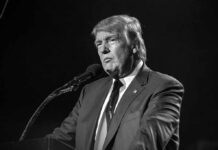
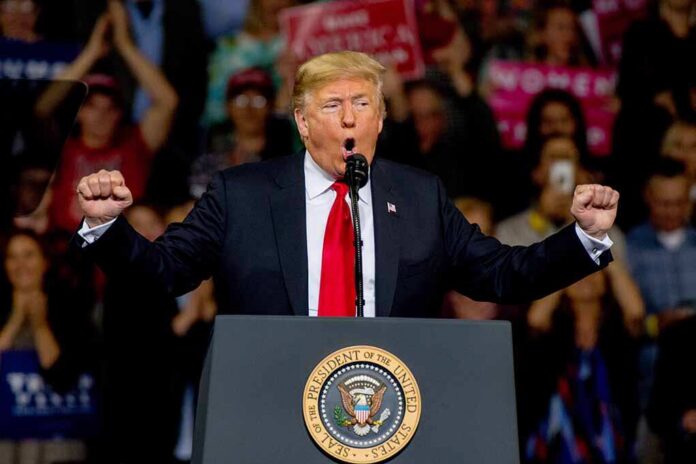
Across mid-to-late October 2026, President Trump made El-Sayed’s alleged Muslim Brotherhood ties a central line of attack in Michigan. At an October 15 Rose Garden lunch, he labeled El-Sayed “a Muslim Brotherhood guy, 100%, 100%”—a crisp, categorical claim attributable to the President and contemporaneous with the campaign calendar. Within days, that characterization migrated into direct-to-voter communication: a video message told Michiganders that El-Sayed is “a Muslim radical” and “a Muslim Brotherhood member, even though he denies it”. By October 25 in Port Huron, Trump cast his presence in the state as mission-driven—“to keep a jihadist Muslim Brotherhood member from becoming a United States senator”—tying the charge to the stakes of the race.
Importantly, the message did not begin and end with Trump. Former congressman Mike Rogers echoed the demand that El-Sayed disavow the Brotherhood at a Birch Run event on October 17; that same day, Trump reinforced the line in a separate video, illustrating a rhythm of allegation and repetition that marks coordinated campaign communication rather than improvisation.
El-Sayed’s Response and the Single On-Record Caveat
El-Sayed drew a clear line. Asked at an October 17 town hall whether he would disavow the Muslim Brotherhood, he answered, “sure, yeah, absolutely,” a statement promptly reflected in national reporting alongside his broader rejection of suggestions of “dual loyalty”. That public denial became part of the narrative—available to voters and journalists in real time, not reconstructed afterward.
As the exchanges accelerated, one explainer piece assessed the allegations and noted that published materials advancing the claim did not present documentary evidence proving organizational membership—no membership rolls, financial records, or authenticated communications in the public domain at the time of publication. That single, discrete observation surfaced inside coverage of what both sides were saying, not as a separate inquiry into verification.
How Campaigns Use “Muslim Brotherhood” As A Category
Politically, “Muslim Brotherhood” is an unusually malleable label. It can mean the specific Egyptian organization, a broader ideological movement with diffuse affiliates, or a loose shorthand for “Islamist politics”—three distinct categories that imply different evidentiary burdens. Campaign rhetoric tends to collapse those distinctions, turning a spectrum into a binary. That collapse simplifies messaging: it is easier to say “member” than to parse sympathies, networks, or policy overlap.
The Michigan episode fits a durable pattern observed over two decades of American races involving Muslim candidates. Scholars who have tracked dozens of contests since 2001 describe recurring mechanisms of electoral Islamophobia—accusations that candidates are tied to extremist groups, insinuations about Sharia imposition, and claims of dual loyalty that place Muslim identity itself on trial. The pattern does not require new facts each cycle; it relies on the same rhetorical frame, re-applied to new names, with social media and partisan media serving as force multipliers.
Why the Michigan Messaging Resonated
Three features made the allegation sticky in Michigan. First, repetition from multiple messengers—Trump from the White House and on the stump, Rogers at Michigan venues—gave the claim ambient presence in local news cycles and talk radio. Second, the framing used categorical language (“100%”) and identity markers (emphasis on El-Sayed’s Muslim name) that are designed to be memorable, quote-ready, and polarizing. Third, the charge was yoked to the highest-stakes frame in politics—national security—by invoking “jihadist,” which moves discourse from policy disagreement into existential threat territory.
Media coverage, in turn, documented both the allegations and the pushback they triggered among Arab American and Muslim community leaders who read the language as anti-Muslim. That interpretive contest shifted some focus from the factual membership claim to the rhetoric’s implications—an effect frequently seen in similar episodes where identity, security, and electioneering intersect.
Mechanics of Evidence in a Membership Claim
In campaigns, a membership allegation is straightforward to state but complex to prove. Concrete substantiation typically rests on a limited universe of items: authenticated organizational documents, financial trails, communications that establish direction or coordination, travel or meeting records, or credible agency assessments. Trump at one point urged voters to examine El-Sayed’s “past correspondence,” but the underlying materials were not produced publicly alongside the claim in the cited coverage. A news analysis piece likewise observed the absence of documentary proof in the published record at the time while recounting the President’s assertions and El-Sayed’s denial.
The upshot for readers is procedural, not philosophical: when campaigns level organizational-membership allegations, the evidentiary bar is higher than for ideological critique. The Michigan exchange illustrates how the rhetoric can run ahead of documentation in the public square, even as both sides stake clear positions.
At a Michigan rally backing Republican candidates, Trump accused Democratic Senate nominee Abdul El-Sayed of extremist ties and questioned whether he should serve in the Senate. El-Sayed has denied such allegations, and no evidence has been presented pic.twitter.com/SineTvXIIU
— MEAWW News (@meawwcom) October 26, 2026
Implications For Voters and the Information Environment
For voters, the Michigan case underlines a practical discipline. Separate three things: what was said, whether the target disavowed it, and what—if anything—has been presented publicly that would prove or disprove a specific organizational tie. All three are discernible from contemporaneous reporting in this episode: the President made categorical allegations from multiple platforms; El-Sayed denied and disavowed; explanatory coverage noted the lack of publicly presented documentary proof of membership at the time of publication.
The broader information environment encourages speed over scrutiny. Repetition by high-profile figures gives an allegation oxygen; community backlash and counter-speech ensure the counter-narrative survives long enough for late deciders to hear it. That dynamic does not resolve the factual question, but it shapes what most citizens ever learn about it. In the absence of adjudicating institutions stepping in mid-campaign, the electorate is left with a familiar choice: weigh categorical claims against denials, attend to evidence when it is offered, and discount the parts that rest solely on identity or rhetoric rather than verifiable records.
Sources:
cbsnews.com, detroitnews.com, edition.cnn.com, post-gazette.com, ndtv.com
© fixthisnation.com 2026. All rights reserved.