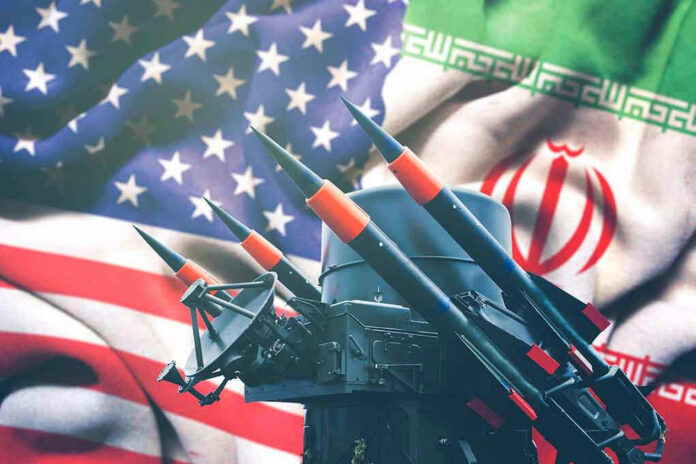
Iran is now conditioning any talks with Washington on a Lebanon truce and the release of frozen assets—an escalation that could turn a fragile ceasefire into a wider regional showdown.
Quick Take
- Iran’s parliament speaker says Lebanon is “inseparable” from a reported two-week Iran–US ceasefire, despite US and Israeli denials.
- Tehran claims the ceasefire’s “key clauses” were violated, citing continued Israeli strikes in Lebanon, US drone activity, and disputes over enrichment rights.
- Iran’s leadership argues negotiations are “unreasonable” or “meaningless” until a Lebanon truce is secured and other conditions are met.
- Conflicting accounts of the ceasefire terms highlight how easily diplomacy can collapse when side conflicts and proxy networks remain active.
Iran Links Lebanon to US Talks as Ceasefire Terms Are Disputed
Mohammad Bagher Ghalibaf, Iran’s parliament speaker, publicly tied Lebanon to a recently announced two-week ceasefire framework involving the United States. Iranian statements described Lebanon and the broader “resistance axis” as integral to the arrangement, while US and Israeli positions reportedly reject the idea that Lebanon is part of any Iran–US ceasefire understanding. That clash over basic terms matters because it determines what each side counts as a violation—and what triggers retaliation.
AFP: Iran speaker demands Lebanon truce, release of frozen assets 'before negotiations'
— Nour Eldeen Al-Hammoury (@NourHammoury) April 10, 2026
Ghalibaf also warned that violations would bring “explicit costs,” language that reads as deterrence but can also harden positions when strikes continue. Reporting around the dispute points to ongoing Israeli attacks in Lebanon as a core Iranian grievance, with Tehran framing those strikes as incompatible with a ceasefire it says includes Lebanon. The net effect is a diplomatic stalemate where each side claims the other is moving the goalposts.
What Tehran Says Was Violated—and Why That Freezes Negotiations
Iran’s argument rests on alleged breaches of “key clauses” of a proposal connected to the ceasefire and prospective negotiations. Iranian claims include continued Israeli strikes in Lebanon, US drone activity described as incursions, and disagreements over Iran’s uranium enrichment rights. President Masoud Pezeshkian echoed the line that, with strikes continuing, negotiations become strategically pointless. These claims are central to Tehran’s strategy: if the ceasefire is already “broken,” Iran can justify refusing new concessions.
At the same time, the public record described in available reporting leaves key details unresolved, including the exact written terms of the ceasefire and how enforcement would work. That uncertainty is not a small technicality; it’s the difference between a verifiable agreement and a messaging battle. When terms are ambiguous, actors can selectively interpret events as violations, even as each side insists it is acting defensively. That dynamic routinely pushes regional crises toward escalation instead of de-escalation.
Frozen Assets Become Leverage in a High-Stakes Bargain
Ghalibaf’s demands also included releasing frozen Iranian assets before negotiations proceed, tying money directly to security outcomes. Iran has long sought relief from sanctions pressure, and references in reporting to frozen assets underscore how economic leverage is used to shape strategic behavior. For American readers, it’s a familiar problem: cash and concessions can be framed as “confidence-building,” yet they also risk funding regimes or networks that oppose US interests if verification is weak.
From a conservative, limited-government perspective, the lesson is not that diplomacy is inherently wrong, but that enforcement and clarity matter more than lofty statements. If a ceasefire can’t clearly define the battlefield—especially when proxy forces and cross-border strikes are involved—then “talks” can become a tool for delay rather than resolution. The available reporting also indicates partisan-style blame casting between sides, which makes practical compliance harder and miscalculation more likely.
How This Fits the Wider Regional Pattern—and What to Watch Next
Iran’s insistence on protecting allied forces in Lebanon reflects its longstanding reliance on regional partners to project power and deter adversaries. The dispute also shows how Israel–Hezbollah tensions can effectively veto US–Iran diplomacy, even when Washington’s focus is nuclear risk and sanctions. With both sides disputing whether Lebanon is even covered by the ceasefire, the next developments to watch are straightforward: whether strikes continue, whether drone activity is curtailed, and whether any text of the proposal is clarified.
BREAKING – Iran speaker demands Lebanon truce, release of frozen assets 'before negotiations' https://t.co/H11U9YNai2 pic.twitter.com/EPpz1LKjwQ
— Insider Paper (@TheInsiderPaper) April 10, 2026
For Americans skeptical of foreign entanglements, this episode reinforces why clear national interests and verifiable terms matter before any financial or diplomatic concessions are offered. The reporting available so far does not independently confirm the ceasefire’s detailed clauses, which limits outside assessment of who is violating what. Until those terms are transparent—or at least mutually acknowledged—Tehran’s new preconditions and Washington’s denials point to a standstill that could quickly become another round of escalation.
Sources:
Iran parliament speaker says US violated key clauses of proposal, calls talks unreasonable
Iran speaker demands Lebanon truce, release of frozen assets before negotiations