A supposedly “high-security” Washington media gala turned into a national embarrassment after an armed suspect reportedly got inside—right after a Fox News host was overheard warning that nobody was “even trying anymore.”
Quick Take
- Fox News host Jimmy Failla was reportedly caught on a hot mic criticizing lax entry procedures at the White House Correspondents’ Dinner shortly before a shooting scare.
- Authorities later described a suspect who allegedly breached security carrying multiple weapons, triggering questions about screening and perimeter control.
- President Donald Trump publicly praised the Secret Service response after the breach, even as lawmakers pushed for answers about how it happened.
- Former security officials and legal analysts highlighted procedural failures that sound familiar to Americans who feel government “systems” no longer work.
Hot-mic moment spotlights a security culture problem
Jimmy Failla’s alleged hot-mic comments cut through the usual Washington self-congratulation: he described what looked like casual access control at the entrance, including people holding doors open, and labeled the security “pathetic.” The significance is less about celebrity chatter and more about what it suggests—basic gatekeeping may have been treated as a formality at an event where politics, media, and high-profile targets converge. If accurate, the warning landed minutes too early to stop what came next.
Fox News host Jimmy Failla Caught on Hot Mic Blasting ‘Pathetic’ Security at WHCD Before the Shooting: ‘Two Random Chicks Holding the Front Door Open… They’re Not Even Trying Anymore’ (VIDEO)https://t.co/8D44t3GC1N
— Did I Piss You Off? (@DIPYOMUCH) April 28, 2026
Reports tied to Fox News video coverage indicate an armed suspect ultimately penetrated the event’s security environment, setting off a shooting incident or attempted attack scenario. Law enforcement briefings referenced by Fox coverage emphasized the “volume” of weapons involved, which immediately raises practical questions: what checks were performed at the outer perimeter, how many screening layers existed, and whether staff and contracted security were coordinated with federal protectors. Precise timing details remain unclear in the provided material, limiting definitive reconstruction.
What officials say happened—and what still isn’t confirmed
Fox News reporting referenced updates from D.C. police, the FBI, and the U.S. attorney describing the suspect’s armament and the seriousness of the breach. That official framing matters because it suggests the incident was not a minor disruption but a high-risk failure that forced a rapid protective response. At the same time, the research packet notes a key limitation: the hot-mic audio and full context for Failla’s exact remarks are not independently transcribed here, so readers should treat the quote as reported, not verified line-by-line.
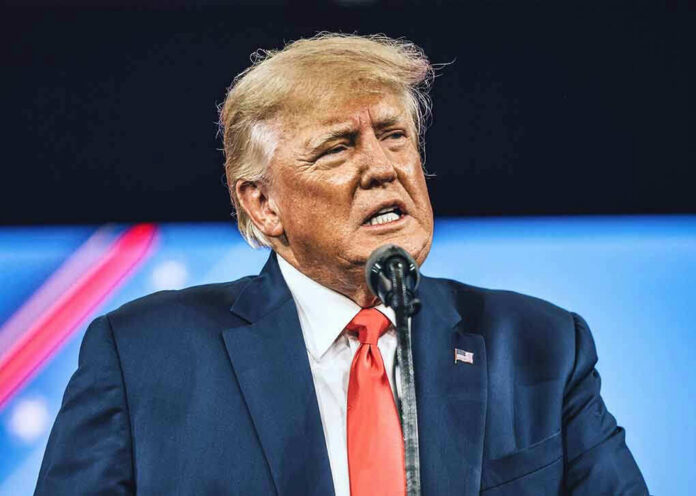
President Trump’s response, as relayed in Fox coverage, struck a split-screen message that many Americans recognize. Trump credited the Secret Service for its reaction after the breach while still describing the reality of an armed intruder reaching a sensitive venue. That combination—praise for the people who acted fast, paired with frustration at how the system allowed the threat to emerge—mirrors a broader public mood across party lines. People can respect frontline professionalism and still demand accountability for preventable lapses.
Oversight pressure grows as experts cite perimeter and screening failures
Republican-led oversight interest quickly moved to the center of the story, with lawmakers seeking briefings and explanations about how a suspect could get close enough to endanger a room full of protected and high-profile individuals. Former officials featured in Fox segments reportedly expressed shock at the amount of weaponry that made it through, underscoring the gap between “security theater” and true layered defense. Their critique focused on fundamentals: entry control, credential verification, and perimeter discipline—unflashy steps that stop disasters.
Why this resonates beyond one night in Washington
The WHCD is often portrayed as a harmless D.C. tradition, but it also concentrates political power, media influence, and public attention in one place. When security appears casual at that kind of event, it feeds a longstanding complaint from both the right and the left: elites live by different rules, and institutions that demand compliance from ordinary citizens can’t reliably protect them—or even themselves. For conservatives especially, the episode reinforces skepticism toward bloated bureaucracies that talk competence while failing at basics.
The immediate policy lesson is straightforward: serious venues require serious controls, even when attendees are famous and the vibe is celebratory. The political lesson is harder: every highly visible failure deepens distrust in federal institutions at a time when Americans already feel squeezed by inflation memories, cultural conflict, and a government that seems more focused on narratives than outcomes. Investigators now face a narrow test—produce clear answers, assign responsibility where warranted, and implement reforms that measurably reduce the odds of a repeat.
Sources:
Trump describes WHCD breach and praises Secret Service response
DC Police and U.S. Attorney provide update on suspect’s weapons
John Yoo discusses suspect’s political motives and warning signs
House Oversight lawmakers demand Secret Service briefing after WHCD incident
Former DHS and FBI officials analyze WHCD perimeter and screening failures