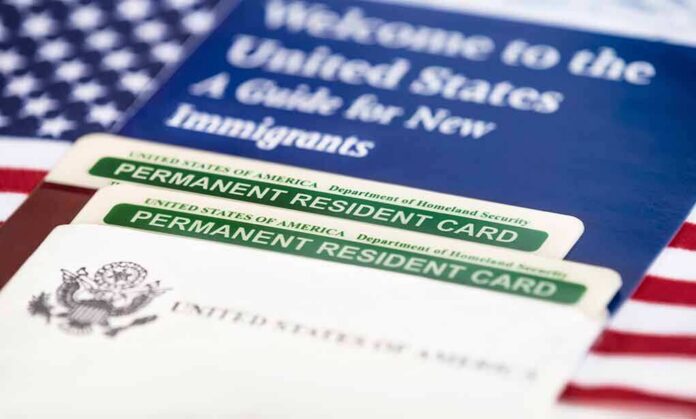
The fight over Haitian Temporary Protected Status is not really about whether “foreigners” are being prioritized over Americans; it is about whether U.S. law and policy can acknowledge that a country so dangerous Americans are told not to go there may also be too dangerous to forcibly send long-settled, legally protected Haitians back.
At a Glance
- Haiti’s security collapse has led the U.S. government itself to warn Americans not to travel there, even as some politicians press to deport Haitians who have lived and worked here for years.
- Temporary Protected Status (TPS) for Haitians is legally fragile after a Supreme Court ruling, but the humanitarian crisis and economic integration of Haitian communities remain unchanged.
- Evidence from economists, employers, and state leaders indicates Haitian TPS holders are net contributors, sustaining sectors like hospitality, manufacturing, and healthcare rather than displacing U.S. workers.[2][7]
- Claims that extending TPS “prioritizes foreigners over Americans” misstate what TPS is, how it works, and who benefits from the labor and community stability it enables.[1][2][7]
What TPS Is – and What It Is Not
Temporary Protected Status is a statutory humanitarian tool Congress created in 1990 for a narrow purpose: to shield certain foreign nationals already in the United States from being returned to countries where war, natural disaster, or systemic collapse make return unsafe. It is not a backdoor to citizenship, nor is it a general immigration program that allows anyone who arrives later to sign up; only people present in the U.S. on specific designation dates qualify. TPS grants two practical protections: a temporary stay of removal and work authorization. It does not confer permanent residence, does not itself lead to a green card, and does not absolve recipients from having to meet the usual, demanding criteria for any future visa or status. In other words, TPS is a humanitarian pause button, not a reset switch.[4][21][23][25][27]
Haitians first received TPS after the 2010 earthquake, as the Obama administration recognized that mass deportations into destroyed infrastructure and unstable politics were incompatible with basic safety. Repeated extensions, under both Democratic and Republican administrations, reflect a simple reality: Haiti’s conditions have never stabilized enough to make large-scale forced return compatible with the statute’s core premise of “temporary” danger.[5][21][25]
Haiti as a “Country in Chaos” – By U.S. Government’s Own Measures
Supporters of terminating Haitian TPS routinely argue that Haiti’s dysfunction is long-standing and not the United States’ responsibility. That is partially correct historically, but it misses a crucial contemporary fact: the U.S. government itself tells its own citizens that Haiti is too dangerous to visit. The State Department travel advisory has repeatedly warned Americans against travel to Haiti because of rampant crime, kidnapping, civil unrest, and severely limited health care. In recent months, gang control over key territory and infrastructure has been so severe that U.S. carriers have temporarily stopped flying into Port-au-Prince, complicating any discussion of “safe” deportations.[1]
When former Ohio Governor John Kasich calls Haiti a “country in chaos” and describes sending long-settled families back there as “crazy,” he is not inventing a narrative for political effect; he is echoing his own government’s risk assessments. That matters. If a destination is judged too dangerous for voluntary travel by Americans, it is hard to argue, with a straight face, that it is safe enough to mandate involuntary return for people whose only protection is a temporary, revocable legal status.[1][4]
The Supreme Court’s Ruling: Lawful Authority Versus Policy Wisdom
The Supreme Court’s decision in Mullin v. Doe reshaped the legal ground under TPS. In a 6–3 ruling, the Court held that the TPS statute largely bars federal judges from reviewing the Department of Homeland Security’s decisions to terminate a country’s designation, including challenges to the internal decision-making process. Lower-court injunctions that had kept Haiti’s TPS designation alive despite termination orders were swept away, and U.S. Citizenship and Immigration Services instructed employers to treat July 1, 2026 as the expiration date for TPS-based work authorization for Haitian and Syrian employees.[11][13][18]
Justice Alito’s opinion frames TPS as a tool squarely within executive discretion; Justice Thomas’s concurrence goes further, asserting that foreign nationals have no equal protection rights against the federal government in this context. That is an important legal boundary line, but it does not answer the policy question: should a president exercise that discretion to force return to a country the same government labels gravely unsafe? Authority does not imply wisdom. The decision says the administration may terminate TPS; it does not imply that termination, in current Haitian conditions, is the prudent or moral choice.[11][18]
Economic Stakes: Who Really Benefits from Haitian TPS Holders?
One of the most persistent talking points in the push to end Haitian TPS is that it represents a giveaway to “foreigners” at the expense of American workers. Yet the available economic evidence points in the opposite direction. A group of economists who submitted an amicus brief in a related Supreme Court case warned that terminating TPS for more than 1 million immigrants from over a dozen countries would “inflict massive harm” on the U.S. economy, not relieve it. They found TPS holders, including Haitians, add to overall employment rather than push native-born or authorized workers out of jobs.[7]
On the ground, those macro patterns are visible in places like Florida’s hotel sector and in midwestern cities such as Springfield, Ohio. Florida hotel operators have publicly acknowledged that losing Haitian TPS workers would force them to lay off hundreds of staff and cut services, because these workers are integral to operations in cleaning, maintenance, and guest services. In Ohio, Governor Mike DeWine has described Springfield as “coming back” partly because Haitian immigrants, many under TPS, are filling critical manufacturing and service jobs local employers struggled to staff. DeWine is explicit: if Haitians lose TPS, they lose work authorization, companies can no longer employ them, and the blow falls on local economies and state revenue, not on Haitian families alone.[1][7]
More broadly, Haitian immigrants and TPS holders have been found to bring “substantial economic benefits” to their communities, including multiple cities in Ohio. Former Ohio attorneys general, in an amicus brief, marshal economic literature and local testimony to argue that Haitians are a “critical aspect of Ohio’s statewide economic success,” with no evidence they are more prone to crime than native-born citizens or other immigrant groups. They are, in short, taxpaying, law-abiding contributors woven into local economic and civic life, not an external burden foisted on Americans.[2]
Crime, “Illegality,” and the Rhetoric of Threat
Another axis of attack on Haitian TPS turns on alleged criminality and unlawful entry. Media personalities and former officials have claimed, for instance, that “91%” of Haitian TPS beneficiaries entered the country unlawfully, or that “65%” are on welfare. Those figures are invoked repeatedly in commentary but have not been substantiated through publicly verifiable Department of Homeland Security or U.S. Citizenship and Immigration Services data. They function rhetorically as a way to paint TPS as a magnet for abuse, not as a reflection of documented patterns.[1]
By contrast, the amicus brief from former Ohio attorneys general emphasizes that available evidence shows Haitian immigrants, including TPS holders, are not more likely to engage in crime than other immigrants or American-born citizens and often appear more law-abiding. That finding aligns with a broader body of research which has consistently shown immigrants have lower crime rates than native-born populations. It does not mean no Haitian has committed a crime; it means the narrative of a crime-prone cohort exploiting TPS is not supported by aggregate evidence.[2]
On unlawful entry, the legal structure of TPS matters. The program applies only to people already in the United States on specific dates when a country’s conditions trigger designation. Many Haitians who now hold TPS, particularly those who arrived after the 2010 earthquake or via Biden-era humanitarian programs, did so through lawful means—parole, visas, or other mechanisms—before they received TPS as a protection against unsafe return. Even when someone originally entered without inspection, TPS does not erase that history, but it does recognize that forcing return into extreme danger is a separate question from how they first crossed the border.[1][3][4][23]
“Prioritizing Foreigners Over Americans” – Or Protecting Americans’ Own Interests?
The claim that figures like John Kasich or Mike DeWine are “prioritizing foreigners over Americans” because they oppose TPS termination rests on a narrow, zero-sum framing: any legal protection for noncitizens is presumed to come at Americans’ expense. The evidence suggests a more complicated reality. Haitian TPS holders are not a distant population; they are co-workers in hospitals, hotels, factories, and home-care agencies, whose labor underpins services Americans rely on. When TPS is terminated, it is not only Haitians who lose something; employers lose trained staff, local governments lose tax revenue, and Americans lose reliable access to care and services.[1][2][7]
Kasich’s argument, echoed by other Republicans who broke with their party to support legislative extensions, turns on this interdependence. In House debate, one Republican noted that these are “people who came in through the front door legally and are paying taxes and are contributing to our community,” warning that removing them would be both a humanitarian and an economic catastrophe. That is not a sentimental plea; it is a straightforward statement of mutual interest. Protecting TPS in the face of ongoing Haitian instability serves Americans’ material interests by preserving economic capacity and social stability in their own cities and states.[1][6]
Moreover, TPS’s temporary nature is not a reason to ignore reality when “temporary” danger becomes chronic. For more than three decades, TPS has functioned in practice as a long-term, renewable protection because many of the conditions that trigger it—civil wars, state failure, entrenched violence—do not resolve tidily on political timelines. That is not a “gross abuse” of the statute; it is an adaptation to the world as it is. The law gives the executive discretion to reassess conditions; when conditions remain gravely unsafe, renewing TPS is not prioritizing foreigners over Americans, it is using a lawful tool to prevent needless harm.[24][26]
JUST IN: John Kasich comes out in opposition to ending TPS for Haitian migrants following the Supreme Court’s ruling.
Thoughts? 👇 pic.twitter.com/vk4z3n8zRV
— Patty Cummings (@cwalker86239) June 29, 2026
Living Permanently in Temporary Status
For Haitians themselves, TPS has created a peculiar limbo: many have lived in the United States for a decade or more, working, paying taxes, and raising children, yet they remain permanently “temporary.” As one scholar put it, TPS holders live “neither here nor there,” unable to convert their long-term presence into secure legal status and unable to return safely home. Ending TPS does not grant them a new pathway; it simply removes their right to work legally and exposes them to detention and removal over time.[1][4][22][26]
That limbo also affects U.S.-born children, spouses, employers, and communities. When a legal regime treats settled families as expendable because their status is formally temporary, it destabilizes neighborhoods and workplaces in ways that do not map neatly onto the citizen–noncitizen divide. Americans who live alongside Haitian TPS holders, who depend on their labor or care, are implicated in whatever decision is taken.
Sources:
[1] Web – Haiti Is Too Dangerous For Haitians? John Kasich DEMANDS Congress …
[2] Web – GOP Governor Warns Trump Over Haiti TPS Push, Calls It ‘a Mistake’
[3] Web – The Supreme Court has allowed TPS for Haitians to end, putting …
[4] Web – The Supreme Court has allowed TPS for Haitians to end … – Facebook
[5] X – The Supreme Court has allowed TPS for Haitians to end, putting …
[6] Web – A Supreme Court ruling has cleared the way for the Trump …
[7] Web – GOP Governor Inadvertently Makes Case For Immigration Reform …
[11] Web – Today is the day! I’m proud to share with you that my new book …
[13] Web – Supreme Court Ruling Clears the Way for Trump Administration’s …
[18] Web – Mullin v. Dahlia Doe – ACLU of Northern California
[21] Web – Temporary Protected Status (TPS): An Explainer
[22] Web – Temporary Protected Status and Deferred Enforced Departure
[23] Web – Temporary Protected Status (TPS): An Overview
[24] Web – Temporary Protected Status (TPS): Fact Sheet
[25] Web – TPS is rapidly changing as the Administration attempts to terminate …
[26] Web – 1990: Temporary Protection Status (TPS) – A Latinx Resource Guide …
[27] Web – TPS: Living in Between, Neither Here Nor There – USC Dornsife
© fixthisnation.com 2026. All rights reserved.