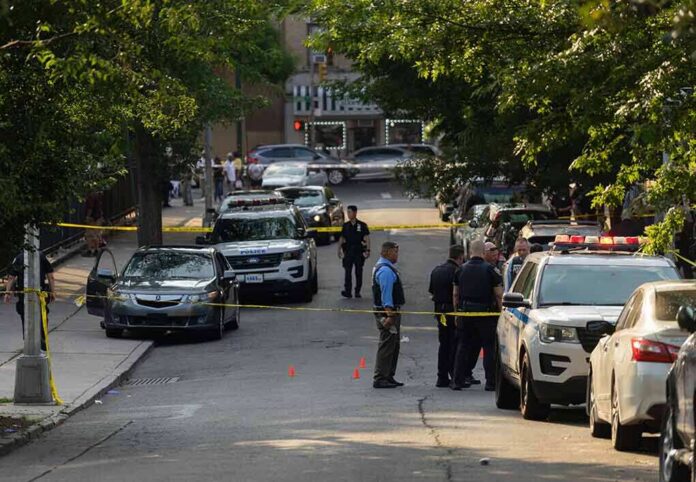
Europe’s most effective counterterrorism work now happens before the public ever sees a blast or a crime scene: intelligence-led disruptions that surface as indictments, weapons seizures, and arrests tied to foreign-directed cells targeting Jewish and Israeli sites in major cities.
At a Glance
- German federal prosecutors charged seven suspects as Hamas operatives accused of preparing attacks in Germany or Austria, acting on orders from senior figures.
- The alleged plot matured beyond talk: prosecutors say the cell procured or sought weapons and timed violence around symbolic dates.
- Recent cases suggest a shift toward external operations by Hamas—contingency planning, weapons caches, and pre-recorded claim videos—thwarted before execution.
- The through-line is prevention: coordinated European policing, intelligence sharing, and terrorism charges that emphasize foreign direction and logistics.
What authorities say happened—and why it matters
German federal prosecutors in Karlsruhe charged seven men with membership in a foreign terrorist organization and preparing an attack, alleging they operated as part of a covert Hamas network targeting Israeli and Jewish institutions in Germany and Austria. Prosecutors contend the suspects acted on instructions from senior Hamas figures and had moved from general intent to concrete planning, including weapons procurement—an inflection point security services treat as the line between aspirational plotting and imminent threat.
This is not an isolated file. In parallel investigations since late 2025, German authorities and their European counterparts have arrested additional suspects, seized weapons, and documented logistics support consistent with external operations tradecraft: safe-house storage, cross-border facilitation, and efforts to locate or build covert caches. One case included a pre-recorded claim-of-responsibility video, the sort of artifact that typically appears only after an attack—here, found before the plan reached execution.
How a covert foreign-directed cell is built
External operations design starts with direction and intent. Prosecutors and intelligence services describe a command-and-control spine linking operatives in Europe to senior Hamas coordinators abroad. The local network’s job is to translate intent into capability: recruiting trusted facilitators, procuring weapons, and casing soft but symbolically potent targets such as synagogues, community centers, or Israeli-affiliated venues. Once weapons enter the picture—handguns for close-in assaults, rifles for mass-casualty potential, or explosives for spectacle—authorities typically intervene. That sequence tracks with recent arrests tied to Hamas-linked logistics in Germany, Austria, and neighboring states.
Timing matters. Several cases reference plans pegged to the October 7 anniversary, an operational signature that blends propaganda and shock value. Prosecutors say suspects prepared for attacks on or around that date, a pattern reinforced by earlier arrests in which investigators recovered a pre-recorded claim-of-responsibility video announcing an October 7–timed operation. Symbolic scheduling is not incidental theatrics; it is part of the effect the planners seek, and it helps investigators attribute and anticipate.
What distinguishes these prosecutions: prevention over postmortem
European counterterrorism has evolved toward “left of boom” interdiction—the point before a device is triggered or a gunman moves. The public record therefore reads differently: courtroom filings emphasize foreign-organization membership, procurement attempts, and conspiratorial acts rather than photographs of blast sites. German cases linked to Hamas illustrate this shift. Prosecutors stress foreign direction, preparation for a serious violent offense, and the defendants’ roles within a structured cell, a frame that triggers the most serious terrorism statutes and enables broader investigative powers.
This preventive model is not new, but the Hamas-specific pattern is. Analysts at West Point’s Combating Terrorism Center have underscored that Hamas historically failed to mount successful attacks outside Israel and the Palestinian territories—not for lack of trying. Recent German and Austrian matters point to contingency planning years in advance, including stashed firearms and networked facilitators; the difference is that police are now disrupting those chains earlier and more consistently, often with cross-border warrants and joint surveillance.
From intent to capability: the evidence prosecutors lean on
When authorities charge foreign-terrorist-organization membership alongside preparation for an attack, they typically bring a layered evidentiary file: communications with handlers, operational security practices, weapons or parts, reconnaissance notes, and financial or travel patterns that match clandestine tradecraft. In these German cases, prosecutors have publicly emphasized the weapons component—either procured or sought—and the defendants’ roles within a Hamas-directed endeavor to strike Israeli and Jewish targets in Berlin or Vienna.
Adjacent arrests strengthen the picture. A BBC-documented detention of a Lebanese national in Germany described planning against Jewish and Israeli sites; other reports reference seizures in Austria and the United Kingdom tied via German warrants and mutual legal assistance channels. Threaded together, they describe a distributed cell architecture that converts external orders into local lethality—precisely the configuration European services are optimized to detect and disrupt.
The strategic shift: external operations as a risk vector
Why the turn outward? External plots serve multiple objectives for a group like Hamas. They impose costs on adversaries’ diaspora communities, generate global media oxygen, and signal transnational reach even as the organization absorbs military pressure at home. European casework and intelligence assessments suggest that, well before recent escalations, contingency plans were laid for small-arms attacks and that caches or contacts in Europe were cultivated to accelerate execution when a political decision was made to act.
The operational barriers are substantial—surveillance-savvy services, firearms controls, and cultural and linguistic friction—but they are not insurmountable. That is why logistics nodes matter so much in these indictments. A network that can quietly acquire weapons, move money, and task trusted operatives narrows the gap between ideological intent and kinetic capability. The practical counter is what we are seeing: intelligence fusion, cross-border warrants, and early charges that disable the cell structure before it coheres into violence.
🚨 BREAKING NEWS | GLOBAL PULSE NEWS 🇦🇹
AUSTRIA: SEVEN CHARGED OVER ALLEGED ATTACK PLOT LINKED TO VIENNA
German federal prosecutors have charged seven alleged Hamas members over accusations that they helped prepare weapons for potential attacks targeting Israeli or Jewish… pic.twitter.com/OYLBaP02et
— GLOBAL PULSE NEWS (@GLOBALPULScgid) September 12, 2026
Implications for security policy and communities at risk
Two implications follow. First, Jewish and Israeli institutions in Europe remain high-probability targets for foreign-directed plots; hardening measures—access control, visible policing, and rapid alerting—are not a temporary fix but a standing requirement. Second, prosecutors’ emphasis on foreign-organization membership reflects a legal strategy calibrated to prevention: it allows cases to ripen at the conspiracy and procurement stage, which is where modern counterterrorism must win. These interventions will rarely deliver the narrative satisfaction of a foiled attack at the last second; their virtue is the absence of victims.
Sources:
pjmedia.com, dw.com, reuters.com, justthenews.com, nampa.org, de.euronews.com
© fixthisnation.com 2026. All rights reserved.