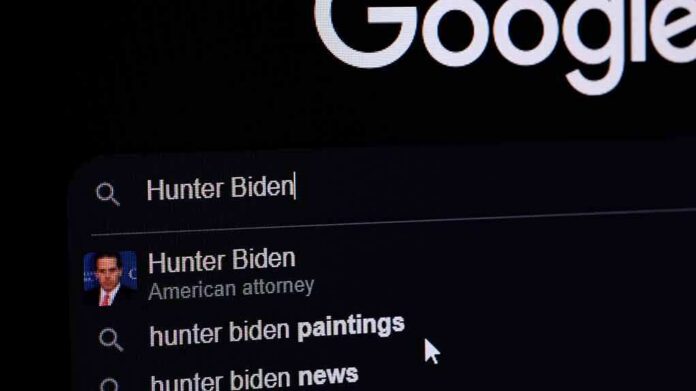
Political meme coins are not built to ship software; they are built to channel attention into tradable theater — and Hunter Biden’s $LAPTOP launch exemplifies how modern politics, online culture, and crypto speculation now fuse into a single asset-shaped performance.
The Short Version
- Published reporting says Hunter Biden is launching a meme coin called $LAPTOP, a pointed nod to the laptop saga and a jab at President Trump.
- Coverage pegs the launch for September 9 on Base, Coinbase’s Ethereum layer-2, with a fixed one-billion-token supply.
- Reports describe a 30% founder allocation and a 20% airdrop pool targeting mailing lists, subscribers, and some TRUMP coin holders.
- This sits squarely in the boom-bust pattern of politically branded meme coins that trade on narrative, not utility.
What is being launched and why it matters
According to multiple outlets, Hunter Biden plans to launch a meme coin called $LAPTOP — a deliberate reference to the multi-year political drama surrounding a computer that became a fulcrum of partisan narrative. The token’s conceit is unmistakable: weaponize a cultural flashpoint and turn it into a tradable ticker that needles Trump and his movement. The Wall Street Journal framed it as “taking aim” at Trump, while other coverage cast it as trolling MAGA, a characterization consistent with the memecoin’s name and reported marketing posture. If your view of meme coins is that they monetize attention, this is that thesis executed with maximal symbolic efficiency.
Beyond the symbolism, the vehicle matters. The coin is slated to launch on Base, Coinbase’s Ethereum layer-2, which offers cheaper, faster transactions and wide wallet compatibility; that choice ensures low-friction onboarding for retail and immediate integration with popular decentralized exchanges. Reports specify a total supply of one billion tokens — a round figure typical of meme assets because it feels plentiful and cheap per unit, which is psychologically useful even if economically trivial.
Reported mechanics: network, supply, and distribution
Coverage is unusually consistent on the plumbing. Outlets say the token will live on Base (an L2 secured by Ethereum), that supply is hard-capped at one billion, and that there is a pre-set distribution: 30% to founders (including Hunter Biden) and 20% to an airdrop pool seeded to lists of subscribers and registrants, with various stories also mentioning holders of the $TRUMP coin in the eligibility mix. Those numbers are not exotic in meme-coin land; they are the grammar of the genre. A founder allocation this large signals a creator-forward profit function. An airdrop pool amplifies reach by granting tokens to defined audiences, priming early liquidity and online chatter. If you have watched politically flavored coins before, you recognize the incentive design: seed a community, concentrate upside, and let narrative do the rest.
In parallel, several outlets referenced a social post where Hunter Biden teased “$LAPTOP” with the September 9 date and a video montage nodding to the laptop saga — the type of visual cue that meme-coin promoters use to tell newcomers what story they are buying without saying it outright.
The playbook: how political meme coins actually work
Meme coins with political branding follow a repeatable arc. Prices respond primarily to narrative heat: headlines, social-media virality, and partisan identity. Liquidity often pools around the earliest minutes; insiders and fast movers claim a disproportionate share of realized gains, while late retail buyers wear most of the drawdown when novelty fades. Academic and market analyses of prior politician-linked tokens, including the $TRUMP coin episode, describe the asset class as speculative and performative — built for attention capture, not cash-flow productivity — with sharp volatility and concentrated insider advantage as the predictable byproducts. That pattern is not a moral judgment; it is an empirical description of how these markets clear when the chief input is culture, not cash flows.
Layer-2 infrastructure like Base lowers the cost of spinning up this theater, reducing transaction fees and making it trivial to move in and out — which, counterintuitively, can increase churn and intensify boom-bust cycles. The point is not that $LAPTOP is unique; the point is that it is canonical.
Why Base, and what that signals
Base is built by Coinbase on top of Ethereum and inherits Ethereum’s security while batching transactions for speed and cost efficiency. For promoters, the draw is distribution: the network plugs into the standard Ethereum wallet stack and popular decentralized exchanges, and it carries Coinbase’s brand halo for mainstream users without implying any listing or sponsorship. Choosing Base signals an intent to make participation easy for U.S.-centric retail audiences already comfortable with Coinbase-adjacent tooling — and to harness the memetic flywheel where low fees facilitate rapid-fire trading, airdrops, and microincentives.
On the user side, Base makes it simpler to claim airdrops and experiment with small positions; on the promoter side, it reduces execution friction and supports sharper launch narratives. In other words, it is an infrastructure choice that maximizes meme coin kinetics.
The politics inside the tokenomics
The design is not just financial; it is rhetorical. Naming a coin $LAPTOP replays a contested political storyline in the simplest possible visual: a ticker symbol. Reports that the airdrop pool will target newsletter subscribers and even holders of the $TRUMP coin convert political identity into distribution logic — a marketer’s dream because every claim on eligibility becomes a reason to tweet, to argue, to share a wallet, to look up how to bridge to Base. Media framing that the project is meant to troll Trump is directionally consistent with those distribution choices; the token’s ostensible “utility” is to provoke, and the airdrop architecture operationalizes that provocation.
None of this requires a complex roadmap. In meme economics, the origin story is the product. The token’s supply schedule and marketing cadence are the monetization model.
Breaking News: Hunter Biden to Launch $LAPTOP Meme Coin on September 9! 🚀
What is the story? Hunter Biden (son of the former U.S. President) is set to launch a new meme coin called $LAPTOP on the Base network on Wednesday, September 9.
Free Airdrop: Surprisingly, a free…
— ibrahim (@ibrqh3m) September 7, 2026
Risk, reward, and the record of celebrity and politician-linked tokens
Investors attracted to political meme coins should anchor expectations in data, not dopamine. Analyses of prior waves show that most celebrity and politician-linked tokens deliver asymmetric outcomes: concentrated early wins, widespread retail losses, and price paths dominated by social spikes and subsequent air pockets. After the high-profile cycles of 2024–2025, investigative tallies reported hundreds of millions in losses tied to memecoin scams and rug pulls — a separate category from legitimate launches but instructive about how attention, impersonation, and thin liquidity can combine to disadvantage retail. Reuters’ review of politician-endorsed coins similarly highlighted the backlash-prone, crash-prone arc once the news cycle moves on.
None of that forecloses speculative trading; it reframes it. If you participate, you are buying story, not stake. The $LAPTOP narrative may surge on culture-war oxygen and sink on narrative exhaustion. The structural incentives — a sizable founder allocation, a promotional airdrop, an L2 built for speed — merely make that movie run faster.
What to watch next
Three practical markers determine whether $LAPTOP performs like a typical political meme coin or writes a fresher chapter. First, how the distribution plays out in practice: airdrop eligibility, claim mechanics, and any vesting or lockups that constrain immediate insider supply. Second, liquidity provisioning and exchange depth on Base at launch; sustainable two-sided markets dampen the worst of opening-day whipsaws. Third, the durability of the narrative beyond day one: does the campaign generate continuing cultural beats, or does it settle into the long tail that defines most meme assets? The reporting establishes the who-what-where: Hunter Biden, $LAPTOP, Base, one billion tokens, founder and airdrop allocations, pointed at Trump. The rest is execution — and in this corner of crypto, execution is mostly story management.
Sources:
mediaite.com, wsj.com, finance.yahoo.com, coinlaw.io, cryptopolitan.com, x.com, coinness.com, en.bloomingbit.io, papers.ssrn.com, coindesk.com
© fixthisnation.com 2026. All rights reserved.