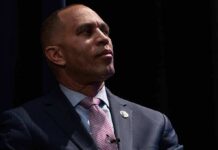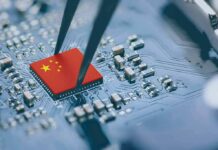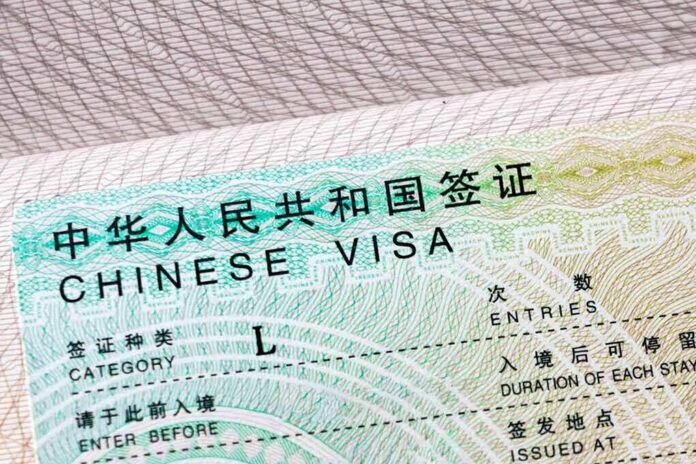
The abrupt fall of Jensen Huang is not really a story about an affair — it is a story about what happens when a single irreplaceable executive sits at the intersection of personal vulnerability, foreign-intelligence suspicion, and the most strategically important supply chain in the world economy.
The Short Version
- Nvidia’s board accepted Jensen Huang’s resignation as CEO, president, and director effective immediately, naming CFO Colette Kress interim CEO and Harvey Jones the board’s first-ever chair, according to a November 11, 2026 SEC filing
- The resignation followed reporting that Huang had been targeted by a foreign-intelligence effort, prompting Nvidia’s board to open an independent investigation
- Reuters reported U.S. intelligence officials believed the woman involved, Alice Huang, was linked to Megaspeed and acted on behalf of Chinese intelligence, with Megaspeed tied to roughly $7.5 billion in Nvidia chip shipments to China
- President Trump said Huang personally told him he “had no idea she was a spy,” and that he believed him; Nvidia’s board separately said it had no reason to believe national security or company secrets were compromised
- Senate Democratic Leader Chuck Schumer demanded the administration disclose what it knew and when, turning a corporate scandal into a congressional oversight matter
What the Corporate Record Actually Shows
Strip away the tabloid elements and what remains is a hard documentary fact: Nvidia’s board, in a filing dated November 11, 2026, recorded that it accepted Jen-Hsun Huang’s resignation as CEO, president, and board member “effective immediately,” installing CFO Colette Kress as interim chief executive while a permanent successor search begins. The company simultaneously named Harvey Jones as its first-ever independent board chair, a governance change that itself signals the board moving to separate oversight authority from the office Huang had occupied unchallenged for more than three decades. Nvidia’s stock closed down more than 4 percent in the trading session following the announcement, reflecting investor unease about leadership continuity at the company that dominates AI-accelerator supply. The filing itself states no reason for the departure. That causal gap matters: Reuters coverage links the resignation to the unfolding scandal, but the board’s own public documents are silent on motive. What is not silent is the parallel announcement that Nvidia was launching an independent investigation “in light of recent reporting that founder and CEO Jensen Huang has been the target of a foreign intelligence effort” — language the board chose deliberately, framing Huang as a target rather than a participant.
The National-Security Fact Pattern
What separates this from an ordinary executive scandal is the alleged China nexus. Reuters reported that Alice Huang, the woman at the center of the affair allegations, was connected to a firm called Megaspeed, which reportedly facilitated the shipment of at least $7.5 billion in advanced Nvidia chips into China — a jurisdiction subject to tightening U.S. export controls on precisely this category of hardware. U.S. intelligence officials, per that same reporting, assessed that she was acting on behalf of Chinese intelligence. That combination — an alleged foreign-intelligence operative with commercial links to a company moving billions in controlled Nvidia silicon — is why Senator Schumer’s public demand landed as more than political theater. He asked the administration directly what it did “once it learned about Mr. Huang’s relationship with a suspected Chinese intelligence asset”, converting a personal-conduct story into a question about executive-branch diligence. Export-control enforcement rarely hinges on proving a single executive personally leaked a document. Regulators and prosecutors more often build cases around access controls, end-use verification, and intermediary screening — the 2025 Cadence Design Systems resolution, in which the company pleaded guilty over semiconductor-design technology transfers tied to a restricted Chinese university and paid roughly $140 million in penalties, is the template. Measured against that standard, the Huang matter sits earlier in the process: an allegation and an internal inquiry, not an indictment or a Commerce Department finding.
The Defense: What Trump and Nvidia’s Board Actually Said
The counter-case here is unusually specific, which is why it deserves equal weight rather than a footnote. President Trump told reporters that Huang relayed to him directly: “I had no idea she was a spy,” adding, “I really believe him”. Trump went further, calling Huang “an honourable guy” and saying he expected Huang to be “in good shape” once the investigation concluded. Pressed on whether Huang should have acted differently on any intelligence he may have received, Trump said plainly, “No, I don’t think so,” and suggested Huang “probably has an excuse for it”. Multiple outlets — the BBC, CNBC, AP, and NBC News — reported substantially the same account across separate interviews, which lends the quote consistency even though it remains, fundamentally, one man’s secondhand relay of another man’s denial. Nvidia’s board statement supplies the second half of the rebuttal, and it is worth quoting precisely: the board said it “has no reason to believe that either national security or NVIDIA secrets were compromised,” while committing that “the Board’s inquiry will examine all available information”. That is not an exoneration — it is a holding statement from an institution with every incentive to project stability to customers, shareholders, and regulators simultaneously. Notably, Nvidia had previously said Huang would remain CEO despite the revelations, before the resignation was ultimately accepted, which suggests the board’s position shifted as facts or pressure accumulated rather than following a fixed script.
What Remains Genuinely Unproven
No public record establishes that Huang knowingly compromised national security, transmitted controlled information, or was aware of any intelligence relationship before it became public. The $7.5 billion chip-shipment figure tied to Megaspeed is Reuters reporting, not a DOJ indictment, a Commerce Department determination, or a court judgment. No named administration official has been identified as having suppressed an investigation or granted favorable treatment because of Huang’s political relationships — Schumer’s letter is a demand for disclosure, not evidence of a cover-up. The underlying intelligence assessment naming Alice Huang as a suspected asset has not been made public in any form accessible to outside reporting. Readers should treat the resignation as a serious, documented corporate event occurring amid a serious, documented allegation — and treat the specific claims of knowing complicity or regulatory favoritism as unresolved questions, not established conclusions.
Why Founder-Dependency Makes This Worse Than an Ordinary Succession Crisis
Academic research on founder-led companies consistently finds that founder-CEO transitions are disproportionately disruptive precisely because founders accumulate authority, technical vision, and external credibility that a management team cannot easily replicate. Nvidia built its roadmap around Huang’s personal judgment for over thirty years; the sudden need for an interim CFO-turned-CEO and a newly created independent board chair is the textbook response to a succession the company never planned for on this timeline. SemiAnalysis founder Dylan Patel’s widely circulated observation — that Nvidia without Huang risks becoming a “committee” rather than a visionary engine — captures why markets reacted to the governance news nearly as sharply as to the espionage allegation itself. The scandal and the succession crisis are distinct problems, but they compound each other: a company already absorbing a national-security cloud now has to do so without the one person who, for better or worse, made its decisions unilaterally.
JUST IN: SemiAnalysis founder Dylan Patel says Nvidia without Jensen Huang becomes a committee, and they could fall behind.
“I think that's the biggest worry for NVIDIA is that now it's like a committee of people doing stuff. And that's just going to make decisions slow.… pic.twitter.com/2qfwpqIGo1
— Iron Vale (@theironvale) November 13, 2026
What to Watch Next
Three things would meaningfully resolve the ambiguity that currently defines this story: a public conclusion from Nvidia’s independent investigation addressing whether company secrets or export-controlled technical data were ever accessed; any Commerce Department or DOJ action concerning Megaspeed and the alleged chip shipments; and congressional testimony, which Huang has reportedly agreed to provide. Until those materialize, the honest summary is this — a major public company lost its founder-CEO amid a credible, intelligence-sourced allegation with real national-security stakes, while the president of the United States has publicly vouched for that same executive’s candor. Both facts are true at once, and neither cancels the other out.
Sources:
youtube.com, sec.gov, reuters.com, rmb.reuters.com, bbc.com, abcnews.com, cnbc.com, investor.nvidia.com, archive.nyu.edu, womblebonddickinson.com, dlapiper.com
© fixthisnation.com 2026. All rights reserved.