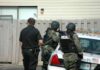
An armed man reportedly rushed past a magnetometer at the White House Correspondents’ Dinner—forcing President Trump into a secure area and raising fresh questions about how “elite” events stay protected while ordinary Americans are told to accept rising disorder.
Story Snapshot
- Secret Service detained a suspect after a weapons scare in the Washington Hilton lobby during the White House Correspondents’ Dinner; no injuries were reported.
- Authorities identified the suspect as Cole Tomas Allen, a 31-year-old teacher from Torrance, California, and said he was armed with multiple guns and knives.
- President Trump and First Lady Melania Trump were moved from the event area to secure locations as agents and officers responded.
- Investigators said the target and motive remain unclear, and federal officials continued probing the suspect’s background, including activity at his California home.
What happened at the Washington Hilton
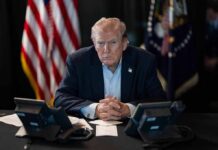
Officials said a suspect ran through the Washington Hilton lobby area near the main screening checkpoint during the White House Correspondents’ Dinner on April 25, 2026. Reports of gunfire or loud bangs triggered an immediate response, and the Secret Service moved quickly to secure President Donald Trump, First Lady Melania Trump, and Press Secretary Karoline Leavitt. Authorities later emphasized that no one was injured and the suspect was taken into custody within moments.
Initial reporting left one key detail unsettled: whether shots were fired by the suspect, by security, or whether the noise came from another source in the chaos. Some accounts described sounds that were briefly mistaken for something as mundane as a dropped tray, before it became clear a serious security incident was unfolding. That uncertainty matters, because it affects how Americans interpret the threat—attempted shooting versus an armed breach stopped before shots were fired.
Who police say the suspect is—and what’s still unknown
Authorities identified the suspect as Cole Tomas Allen, 31, a teacher from Torrance, California. Investigators said he was armed with multiple guns and knives and appeared intent on doing harm, though officials did not publicly confirm a specific target. By early April 26, federal agents were reported at Allen’s home in Torrance as the FBI examined background, possible motives, and whether anyone assisted him.
President Trump later described the suspect as a “lone wolf,” a label that fits a pattern law enforcement uses when no network is immediately evident. Even so, “lone wolf” does not mean “low risk.” The modern reality is that one determined person can exploit gaps in crowded public settings—especially in places where large numbers of VIPs, journalists, and staff converge. Investigators have not released details on planning, communications, or how the suspect obtained or transported the weapons.
Security performance: fast response, uncomfortable questions
Law enforcement credited the checkpoint and rapid reaction for preventing injuries, pointing to how quickly officers drew weapons and overwhelmed the suspect. That operational success is real and should be recognized: the protective mission worked in the moment. At the same time, the fact that an armed person could rush past screening in a high-profile venue underscores a broader problem Americans see everywhere—systems that look strong on paper but can fail under pressure.
Charges filed so far and what could come next
U.S. Attorney Jeanne Pirro announced preliminary charges tied to firearm use and assaulting an officer with a dangerous weapon, adding that additional charges could follow as investigators complete interviews and forensic work. Those early charges suggest prosecutors are treating the incident as more than a disorderly disruption. They also set the stage for a larger legal fight over intent, planning, and whether any federal terrorism statutes apply—questions that typically depend on motive evidence.
Why this incident hits a national nerve
The dinner is a symbol-heavy gathering where political power and national media share the same room, often laughing at Washington’s inside jokes while the country argues over inflation, border enforcement, and whether government still works for regular families. A security breach at that event becomes more than a headline because it reinforces a shared left-right suspicion: elites are protected by layers of security, while everyday citizens face rising volatility with far fewer resources.
Republicans now controlling Washington can frame the outcome as proof that professional protection details can work when empowered to act decisively. Democrats and Trump critics, meanwhile, will likely press for explanations about screening and access at the venue. Both reactions point to a reality Americans across the spectrum feel—government competency is inconsistent, accountability is rare, and only high-profile crises reliably trigger reform. Until investigators release motive and pathway details, the public is left with a disturbing takeaway: a single person nearly turned a high-security political event into tragedy.
What we know about the suspect in shooting at White House press dinner https://t.co/toaEk8VpL8
— France Springs (@FranceSprings) April 26, 2026