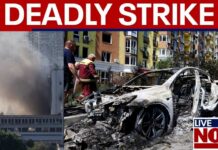
fixthisnation.com — Israeli jets struck sites in southern Lebanon amid a fragile ceasefire, with officials calling them Hezbollah targets and reporters highlighting civilian deaths—raising hard questions about targeting transparency, civilian risk, and how America should posture against Iran’s proxies.
Story Highlights
- Israel described the hit locations as suspected Hezbollah infrastructure and issued evacuation warnings beforehand [1][3].
- Independent outlets reported dozens killed across strikes despite a United States-brokered ceasefire, including children, with claims of civilian-area damage [6][4].
- Evidence provided so far lacks target files, coordinates, or battle damage assessments to verify the exact nature of the struck sites [1][3].
- Competing narratives—counterterrorism versus civilian harm—underscore the information fog that often shapes public opinion before verification [6][7].
What Israel Says It Hit and Why It Warned Civilians
Israeli military statements and eyewitness footage framed the southern Lebanon strikes, including in or near Tyre, as attacks on suspected Hezbollah infrastructure during ongoing cross-border hostilities. Reports say Israel issued renewed evacuation warnings for affected areas before operations, consistent with stated efforts to reduce civilian risk. Israeli leadership reiterated the campaign targets Hezbollah fighters and infrastructure rather than Lebanese civilians, emphasizing intensified operations against the Iran-backed militia after repeated clashes [1][3].
Israeli officials also cited rocket and militant activity from Lebanese territory as the operational trigger, pointing to a months-long pattern of Hezbollah fire into northern Israel and Israeli responses. Public messaging from Jerusalem has focused on degrading Hezbollah capabilities north of the border and re-establishing deterrence. However, the present record offered to the public does not include a released strike dossier, target coordinates, or an official after-action battle damage assessment to verify that the specific sites struck were actively used for military purposes at impact time [1][3][5].
What Independent Reporting Says About Civilian Harm and the Ceasefire
BBC and other outlets reported that Israeli strikes intensified in Lebanon despite a United States-brokered ceasefire, with tallies of dozens killed across multiple locations and accounts of children pulled from rubble. Separate reporting described at least seven to eight civilian deaths in southern Lebanon tied to recent strikes. Local officials and reporters attributed damage to civilian areas, fueling criticism that the bombardment endangered noncombatants amid displacement and fear across the south [6][4][2].
Coverage underscored the absence of independently verified target evidence and noted that evacuation warnings, while meant to mitigate risk, also signal how widely civilians are exposed to danger. The reporting did not supply a ceasefire text or monitoring judgment proving a breach by a specific strike, leaving legal assessments uncertain. The result is a narrative gap: lethal outcomes are documented on camera and in death counts, but the precise military value of each target remains publicly unverified [6][7][4].
The Verification Gap That Fuels Polarization—and What Would Close It
Available evidence is dominated by secondary reporting and official statements without underlying target files. That opacity lets each side fill the void: Israel cites Hezbollah infrastructure and self-defense; critics cite civilian casualties and alleged strikes in populated areas. Without released strike packages, intelligence summaries, proportionality worksheets, or post-strike imagery, outside observers cannot confirm whether a lawful, high-value military objective existed at each site or whether alternatives were available to minimize civilian harm [1][3][6].
Publishing the target dossier, authorization chain, and battle damage assessment for the specific strike would allow scrutiny aligned with the laws of armed conflict and would help separate legitimate counterterrorism from unacceptable risk to civilians. Independent corroboration—such as geolocated imagery, facility ownership records, and hospital logs—would either validate Israel’s claims or bolster calls for accountability. Until then, casualty-heavy footage will shape global opinion faster than facts can be verified [1][3][4].
For Americans who believe in peace through strength and clear rules, two truths can hold at once: Hezbollah is an Iranian proxy that embeds in civilian areas and threatens Israel, and civilian protection still matters under Western legal and moral standards. The United States should continue backing Israel’s right to self-defense while pressing for rapid-released targeting evidence and tighter rules of engagement that keep pressure on terrorists, not families. Transparency and precision are not concessions; they are how free societies fight and win [6][3][5].
Sources:
[1] YouTube – Israeli airstrike hit southern Lebanon
[2] YouTube – Eyewitness footage captures Israeli airstrike in southern Lebanon
[3] YouTube – 8 Civilians Martyred in Israeli Airstrike in Southern Lebanon
[4] YouTube – Netanyahu vows to ‘wipe out’ Hezbollah as Israeli strikes intensify in …
[5] Web – Israeli airstrikes on southern Lebanon kill 7 despite ceasefire
[6] Web – Israeli–Lebanese conflict – Wikipedia
[7] YouTube – Israeli air strikes intensify in South Lebanon despite the ceasefire
© fixthisnation.com 2026. All rights reserved.