France has just become the first country in Europe to flat‑out ban social media for kids under 15, and every user in the country will soon have to prove their age to stay online.
Story Snapshot
- France’s parliament passed a law banning under‑15s from social media and phones in high schools.
- Platforms like TikTok and Instagram must verify every user’s age, starting with new accounts this September.
- Supporters say the ban is needed to protect children’s mental health from online harms and screen addiction.
- Critics warn the law is vague on enforcement, raises privacy worries, and may be easy for kids to dodge.
France’s New Under‑15 Social Media Ban
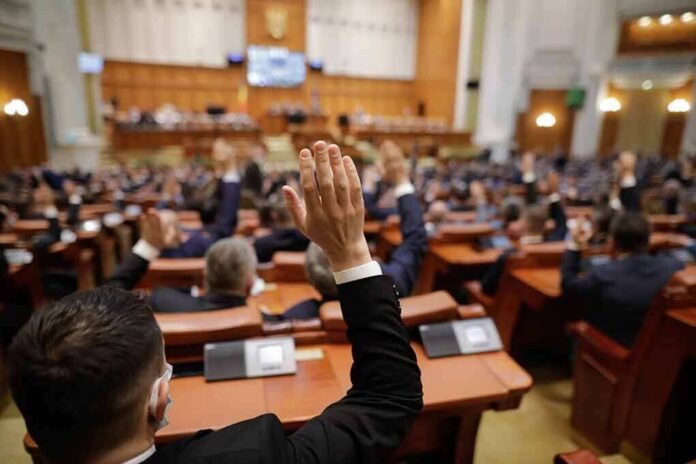
French lawmakers have now approved a nationwide ban on social media access for children under 15, making France the first European country to draw such a hard line. The National Assembly backed the bill in January by 130 votes to 21, and the Senate has since agreed, clearing the way for it to become law. President Emmanuel Macron pushed for the measure and demanded it be enforced by the start of the new school year in September. Supporters frame the move as a response to rising online harassment, anxiety, and depression among teens.
The legal text now says that “access to an online social network service provided by an online platform is prohibited for minors under the age of 15.” That language targets popular apps such as TikTok, Instagram, and Snapchat, while carving out exceptions for online encyclopedias, educational platforms, and open‑source software sites. Lawmakers also tied the ban to a separate rule that blocks mobile phone use inside high schools, arguing that schools should be places to learn, not scroll. Taken together, the rules aim to pull French teenagers out of nonstop feeds and back into real‑world life.
How Age Checks Will Work for Everyone
To make the ban more than words on paper, the government says platforms will have to verify the age of every user. New accounts on social media sites will require proof of age starting in September, and companies will have until late 2026 or January 1, 2027, to check their full existing user base. The law does not lock in one specific tool but points toward “double anonymity” systems, where a separate company or phone operator checks your ID and only sends an age flag back to the platform. That design is supposed to protect privacy by keeping detailed identity data away from the social networks themselves.
Because under‑15s are banned from having accounts at all, anyone flagged as younger than 15 will see their account closed. Adults and older teens will face constant prompts to prove they are over the limit when they sign up or log in from new devices. For families, this means social media will soon work more like buying age‑restricted products: you must show proof first. For platforms, it means real costs to build or buy age‑check tools, and the risk of steep fines if they fail to stop minors from slipping through. This kind of sweeping age‑gating feeds long‑standing worries that big tech firms and governments will track more of people’s online lives than ever before.
Support, Doubts, and the Global Trend
Polls suggest most French adults back strong limits on children’s social media use, with nearly four in five supporting some form of ban for minors. Many parents on both the left and the right are tired of seeing kids glued to their phones and fear that endless scrolling, online bullying, and extreme content are harming young minds. At the same time, civil liberties groups, some lawmakers, and many teenagers themselves criticize the law as heavy‑handed and out of touch. They argue that responsible use, stronger content rules, and better parenting would be smarter than a blanket ban that treats all platforms and all kids the same.
French Lawmakers Back Social Media Ban for Children Under 15 | Breaking News | Express247#France #SocialMedia #OnlineSafety #ChildProtection #Under15 #FranceNews #DigitalSafety #TechNews #SocialMediaBan #InternetSafety #Meta #TikTok #Instagram #BreakingNews #Express247 pic.twitter.com/Zkf79taPXr
— Express 24/7 (@Express247PK) July 21, 2026
Experts also point to loopholes and unclear details. The law bans access for minors but does not spell out in detail how platforms must block under‑15s, leaving regulators to decide later how strict enforcement will be. There is no official list of approved age‑check companies or clear accuracy standards, raising questions about how often kids will be wrongly blocked or wrongly let in. Lawmakers admit that virtual private networks could help teenagers dodge the rules, and the text is still vague on what exactly counts as a “social network” and why some big services, like YouTube and messaging apps, fall outside the core ban.
Why This Matters Beyond France
France’s move does not stand alone. Australia has already pushed to restrict social media for under‑16s, and several European countries, including Greece, Denmark, and Cyprus, are debating similar bans with age limits around 15. European Union reports show a broader push to raise the digital age for social media access and move away from the older model that allowed younger teens on platforms with parental consent. Lawmakers across the West are reacting to a growing body of research that links heavy social media use with anxiety, depression, and self‑harm among young people. But they are choosing the blunt tool of access bans instead of deeper changes to algorithms that reward rage and addiction.
For American readers who already distrust how both tech companies and governments use their power, France’s law hits many nerves. On one hand, it reflects a concern shared by parents of all politics: kids’ brains are being shaped by profit‑driven platforms that push drama, division, and sometimes very dark content. On the other, it shows how quickly governments can decide that basic online tools are off‑limits and then demand ID checks from every citizen to enforce that choice. Whether you lean conservative or liberal, this French experiment raises a hard question that is coming everywhere next: who should control what children see online—their parents, distant bureaucrats, or the same global platforms that helped create the problem in the first place?
Sources:
insiderpaper.com, lemonde.fr, reuters.com, bbc.com, euronews.com, youtube.com, builtin.com
© fixthisnation.com 2026. All rights reserved.