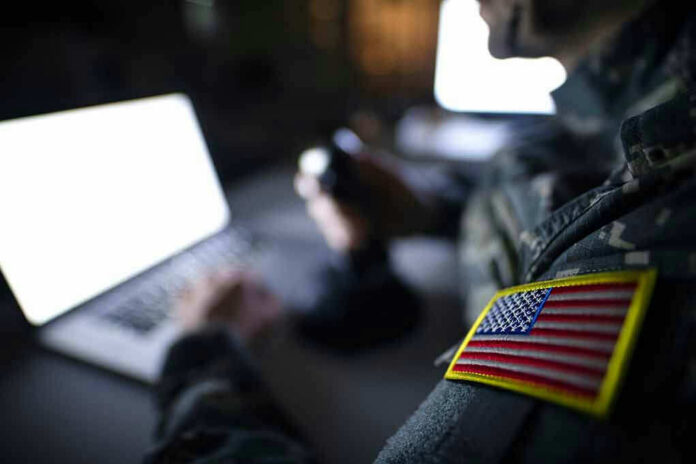
The auto-deleting Signal group used by Pete Hegseth, Marco Rubio, and John Caine is not just a quirky footnote of the Trump years; it is a textbook case of how powerful officials tried to move consequential national-security deliberations into a private, ephemeral channel that regulators could not see and the public could not later reconstruct.
At a Glance
- The Pentagon inspector general found that Defense Secretary Pete Hegseth used an auto-deleting Signal chat on a personal phone to send sensitive, strike-specific information about U.S. operations in Yemen.
- The data he relayed matched a document marked SECRET//NOFORN and included aircraft numbers and strike windows—details that, if intercepted, could have enabled Houthi forces to adjust or evade U.S. attacks.[4][5]
- The chat included an unauthorized participant: Jeffrey Goldberg, editor in chief of The Atlantic, added inadvertently, transforming an internal planning thread into an accidental disclosure channel.[3]
- While the inspector general stopped short of a formal finding that “classified information was leaked,” it concluded Hegseth violated DoD policy, created real operational risk, and failed to preserve official records.[1][4]
- The administration has aggressively framed the same report as a “TOTAL exoneration,” exposing a deeper institutional struggle over what counts as a breach in an era of consumer messaging apps.[2][4]
An Auto-Deleting Backchannel at the Center of Yemen War Planning
The Signal group at issue was not a casual social thread; it sat at the heart of senior-level deliberations over U.S. airstrikes on Houthi targets in Yemen in March 2025. According to the Pentagon inspector general’s report and subsequent press accounts, Defense Secretary Pete Hegseth used his personal cell phone to participate in a group chat with other top Trump officials, including Senator Marco Rubio and national security adviser John Caine, configured with auto-deleting messages and hosted on Signal—a consumer encrypted messaging app outside the Pentagon’s approved secure communications stack.[1][3][8]
On March 15, hours before a set of manned aircraft missions over hostile Yemeni territory, Hegseth relayed detailed operational information into this chat. The content, reconstructed from investigators’ access to CENTCOM documents and partial transcripts first published by The Atlantic, described the quantity of U.S. aircraft and specific strike windows 2–4 hours before execution. This is precisely the kind of time-sensitive targeting information military planners try to keep closely held; if hostile forces obtain it in real time, they can reposition assets, harden targets, or set up ambushes against pilots.[3][5][10]
The choice to use Signal—with disappearing messages and no automatic retention in government archives—was not incidental. Staff configured the app so Hegseth could access it from inside his Pentagon office, where personal devices are otherwise barred, effectively tunneling a consumer messaging channel into a secure space. The inspector general later found this arrangement violated DoD Instruction 8170.01, which forbids using personal devices and unapproved messaging platforms to transmit nonpublic Department of Defense information.[1][4][8]
What the Inspector General Actually Found
The core of the dispute is not whether a chat existed—it clearly did—but what, exactly, moved through it and how the law treats that conduct.
The Pentagon inspector general’s review concluded, first, that at least some of the information Hegseth sent on March 15 matched operational data that U.S. Central Command had classified as SECRET//NOFORN in the originating document. Secret-level information is expected to cause “serious damage” to national security if disclosed; the NOFORN caveat bars sharing it with any foreign nationals, underscoring its sensitivity.[1][4][5]
Investigators traced the Signal messages back to a CENTCOM document describing imminent strikes on Houthi positions, with specific timing, platform types (including F/A‑18 Hornets), and coordination details. They concluded that the material was properly classified when CENTCOM created it and remained marked as SECRET//NOFORN when Hegseth obtained and relayed portions of it into the chat.[2][4][5][8]
Crucially, the inspector general also found that this conduct violated internal policy even if one accepts, for the sake of argument, that Hegseth could have declassified the information. DoD Instruction 8170.01 prohibits using personal devices and nonapproved messaging apps to conduct official business or transmit nonpublic DoD information, classified or not. The report’s language is unambiguous on this point: using a personal cell phone and Signal for such transmissions “risks potential compromise of sensitive DoD information, which could cause harm to DoD personnel and mission objectives,” and “created a risk to operational security that could have resulted in failed U.S. mission objectives and potential harm to U.S. pilots.”[1]
Beyond classification mechanics, the inspector general documented a second pattern of similar behavior: Hegseth shared strike-related flight schedules in a separate Signal chat that included his wife, his brother, and his lawyer—individuals who were neither part of the operational chain of command nor cleared for this level of detail. It also flagged potential violations of federal records law, noting that auto-deleting Signal threads used for official business were not retained in accordance with the Federal Records Act.[1][2][4][6][8]
The Accidental Journalist and the Auto-Delete Problem
One of the most striking features of the Hegseth–Rubio–Caine Signal chat is the presence of Jeffrey Goldberg, editor in chief of The Atlantic, who by all accounts was added inadvertently. What began as a senior Trump-world backchannel suddenly included a major journalist—with the same real-time view of the secretary’s Yemen strike updates as the political principals. The Atlantic later published portions of the chat, making it clear that the thread contained highly granular operational data in close temporal proximity to the strikes.[3][10][12]
Goldberg’s inclusion matters on two levels. First, he was an unauthorized recipient of internal operational information; the inspector general documented that he had no official role and no need-to-know. Second, his presence exposes how brittle auto-deleting, off-platform communications are as a record of official conduct. The only reason the public has any visibility into what was discussed is that a journalist happened to preserve screenshots before messages vanished.
From a governance standpoint, this is the heart of the problem. Classified systems are audited; official email is subject to FOIA and archival rules. An encrypted, ephemeral Signal chat on personal phones is neither. When such a chat becomes the medium for war planning, oversight bodies can only ever reconstruct fragments—what investigators can infer from other documents, and what one participant happened to retain.
Exoneration Narratives Versus the Evidence
Despite the inspector general’s risk assessment and policy-violation findings, the Trump administration has framed the report as vindication. Pentagon spokesman Sean Parnell described it as a “TOTAL exoneration,” insisting that it proved “no classified information was shared” and that “the case is closed.” White House press secretary Karoline Leavitt echoed that line, stating that the review “affirms what the Administration has said from the beginning—no classified information was leaked, and operational security was not compromised.”[1][2]
Director of National Intelligence Tulsi Gabbard and Hegseth’s own team have repeated these claims in interviews and on social media, casting the entire affair as an overblown controversy about harmless “informal, unclassified coordination” for media outreach.[2][7][9]
Those assertions sit uneasily alongside the underlying record. The inspector general explicitly tied Hegseth’s messages to a SECRET//NOFORN CENTCOM document and treated the material as “sensitive, nonpublic, operational information” whose unauthorized exposure could have enabled Houthi forces to counter or evade U.S. strikes. Media outlets that reviewed the classified report or spoke with sources who had done so—including CNN, ABC News, and The Atlantic—have consistently described the content as “highly confidential attack strategies” rather than generic talking points.[2][3][4][5][8]
The one gap the administration seizes on is procedural: the inspector general acknowledged that it did not make a formal determination about whether Hegseth, as an original classification authority, had technically declassified the information before hitting send. That is a narrow question about an internal paperwork step, not about the substance of what was shared or the wisdom of sharing it via Signal. No published account suggests investigators found any documentation of actual declassification; they simply conceded that, as a matter of hierarchy, Hegseth could have exercised that power.[4][8]
An honest reading of the record, therefore, yields a more precise conclusion: the report did not charge Hegseth with a criminal leak of classified material, but it did find that he moved strike-specific operational data sourced from a classified document into an auto-deleting, nonapproved messaging app on a personal phone, in a way that violated policy and created nontrivial risk for U.S. personnel.[1][4][5][8]
Signal, Consumer Apps, and the Broader Trend of “Data Spills”
The Hegseth–Rubio–Caine chat is part of a larger phenomenon that has defined the past decade of U.S. national-security practice: the migration of serious government business onto consumer platforms designed for convenience and privacy, not compliance and auditability. Defense Department training materials now treat “email and Internet postings” as the dominant source of what they call “spills”—unintentional unauthorized disclosures arising from improper safeguarding procedures.[15]
In high-profile cases such as the 2023 Discord leaks, young personnel moved classified intelligence onto a gaming chat server, where it spread far beyond its intended audience and exposed sources, methods, and assessments about Ukraine, Russia, and even spying on allies. The Pentagon has described such leaks as criminal acts and responded with tightened controls, new training, and sharper boundaries around what kinds of tools can touch classified material.[13][14][16][18][20][21]
By contrast, the Hegseth case involves the opposite end of the hierarchy: a cabinet-level official using an off-platform encrypted app to coordinate war plans with political allies. It illustrates how the same structural vulnerabilities—lack of retention, lack of oversight, and ease of forwarding sensitive snippets to unauthorized recipients—can arise when senior officials privilege speed and secrecy over compliance.
This is why the inspector general’s report devotes real attention to the mechanics of Signal itself. End-to-end encryption protects content from many forms of interception, but it does nothing about the risks created by who is in the chat, where they store their phones, and how much detail is shared in a single message. Nor does it address legal obligations to preserve records or maintain clear separation between personal devices and official systems.[1][8][15]
The Atlantic: Hegseth, Rubio, and Caine Had an Auto-Deleting Signal Chat
New records reveal that officials kept using the app, even after the president suggested they stop.https://t.co/KB3isXFCPC
— Politics & Poll Tracker 📡 (@PollTracker2024) June 30, 2026
Why the Hegseth Signal Chat Still Matters
The Yemen strikes took place; the missions were not aborted; no public evidence suggests Houthi forces successfully intercepted the Signal traffic or used it to target U.S. pilots. In that narrow sense, the inspector general could say the operation was not compromised. But to treat that outcome as proof that the conduct was harmless is to misunderstand what security regulators are trying to prevent.[1][2]
National-security protocols are designed around worst-case scenarios and base rates, not lucky breaks. Every time senior officials normalize using personal, auto-deleting chats for operational coordination, they raise the probability that the next spill will not be caught in time—or will involve an adversary more capable of exploiting the data. As RAND’s work on leaks has emphasized, officials often behave as though their disclosures will be read only by domestic audiences, when in reality foreign intelligence services scour those same channels for advantage.[21]
The Hegseth–Rubio–Caine chat also matters for democratic accountability. When war plans and strike timelines move into ephemeral threads on private phones, Congress, courts, and the public lose the ability to reconstruct who knew what, when, and why they made the choices they did. That is why the Federal Records Act violations in the inspector general’s report are not a mere technicality; they go to the heart of how a constitutional system keeps civilian control over the military and checks the concentration of power in a small circle of political actors.[1][6][8]
Finally, the episode exposes a deeper institutional tension. On paper, the Pentagon’s watchdog said what security professionals would expect: this kind of Signal use violates policy and creates operational risk. In public, Pentagon and White House spokespeople insisted the same document “totally exonerated” Hegseth and proved that no leak occurred. The distance between those two narratives shows how politically sensitive modern communications breaches have become—and how hard it is, even with clear findings, to align official behavior with the systems designed to keep it safe.
Sources:
[1] Web – Hegseth, Rubio, and Caine Had an Auto-Deleting Signal Chat
[2] Web – Pentagon Inspector General Releases Report on Hegseth’s Signal …
[3] Web – Hegseth could have endangered troop safety with Signal chat – BBC
[4] Web – Pentagon watchdog finds Hegseth risked the safety of U.S. forces …
[5] Web – Read the full report on Hegseth’s use of Signal from the Pentagon …
[6] Web – United States government group chat leaks – Wikipedia
[7] YouTube – Hegseth on defense after Signalgate inspector general report
[8] Web – A Pentagon watchdog report has found that Defense Secretary Pete …
[9] Web – [PDF] Inspector General – Department of War
[10] Web – Read the Pentagon Watchdog’s Report on Signal Use
[12] Web – The Atlantic releases the Signal chat showing Hegseth’s detailed …
[13] Web – Pentagon watchdog finds Hegseth risked the safety of U.S. forces …
[14] Web – US Defense Secretary shared sensitive information in second Signal …
[15] Web – The Trump Administration Accidentally Texted Me Its War Plans
[16] Web – Hegseth faces renewed scrutiny after Signal chat disclosures
[18] YouTube – Defense secretary Pete Hegseth remarks on group chat leak
[20] Web – U.S. scrambles as classified documents detailing military … – PBS
[21] Web – Discord Leaks – Wikipedia
© fixthisnation.com 2026. All rights reserved.