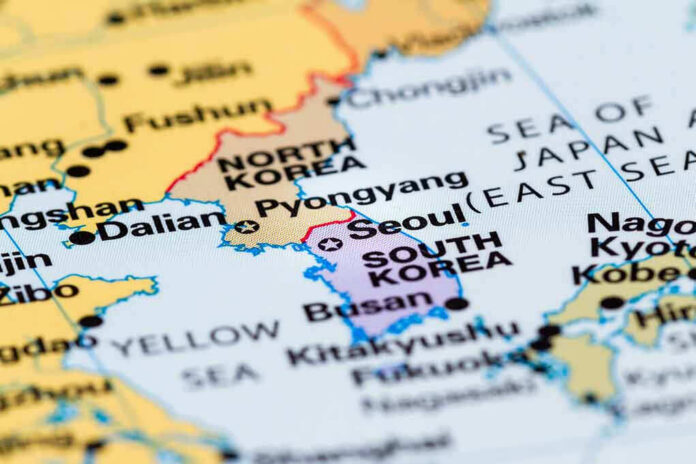
Presidential decisions about allied training on the Korean Peninsula are never just about a calendar of drills; they are choices about money, signaling, and deterrence that ripple through an alliance structure designed for a war that never ended.
The Short Version
- President Trump instructed Secretary of War Pete Hegseth to substantially reduce upcoming U.S.–South Korea joint military exercises, citing cost and signaling concerns.
- The order landed on the eve of Ulchi Freedom Shield, an annual 11‑day exercise package built around high-end readiness scenarios.
- Trump argued the drills are costly and unnecessarily hostile toward North Korea, pointing to his personal diplomacy with Kim Jong Un.
- U.S.–ROK exercises have long served dual roles: practical readiness events and political signals that can deter, reassure, or provoke depending on timing and scope.
What the President Ordered and Why It Matters
President Trump said he directed the Pentagon to “substantially reduce” joint exercises with South Korea, framing the move as a budget-minded correction and a recalibration of political signaling toward Pyongyang. He called the drills costly and said they send the wrong message, especially while he characterizes North Korean behavior toward the United States as restrained under his watch. The instruction arrived as U.S. and South Korean forces prepared to open Ulchi Freedom Shield, the alliance’s principal late-summer exercise window, typically running roughly 11 days and incorporating tens of thousands of personnel across command-post and field environments.
In sober military terms, the stakes are straightforward. Combined exercises are how the alliance rehearses war plans, validates logistics and command-and-control, and pressures test interoperability under stress—modern packages have included counter-drone, cyber, GPS-disruption, and precision fires scenarios that reflect the actual threat environment on the peninsula. Scaling those elements down alters training depth and public signaling in tandem. That is why a late change—especially at presidential level—reaches far beyond a line item in a training calendar.
Ulchi Freedom Shield: The Exercise Package at Issue
Ulchi Freedom Shield is not a single drill; it is a combined, distributed training architecture stitched together to exercise how U.S. Forces Korea, the Republic of Korea (ROK) military, and Combined Forces Command would fight and sustain under attack. In recent iterations, allied planners have woven in contested-spectrum problems (GPS jamming, cyber intrusion), swarming unmanned threats, and complex logistics such as “wet gap” crossings and the onward movement of prepositioned stocks—precisely the tasks that become brittle if they remain tabletop abstractions.
The scale is intentional. North Korea fields dense artillery, increasingly maneuverable short- and medium-range missiles, and a growing cyber portfolio; its forces practice early strikes against allied command nodes and rear-area logistics. Ulchi Freedom Shield’s command-post components drill decision-making under those conditions while live and virtual events stress the pipes—data, fuel, maintenance, medical evacuation—that keep combat power coherent. Trimming such a package can still preserve core readiness, but only if the reduced design remains threat-realistic and integrated across functions, not merely smaller for its own sake.
Cost, Signal, and the Logic of Reduction
Trump’s stated rationale hinges on two claims: the drills are too expensive and they send an inappropriately hostile signal to Pyongyang while diplomacy remains viable. The cost argument is political ammunition presidents often reach for; could a smaller, tighter exercise achieve 80 percent of the readiness effect for a fraction of the outlay? Travel, fuel, strategic lift, and reserve call-ups are significant line items. Past administrations have toggled exercise size and complexity to manage those costs without abandoning the training ladder altogether. The signaling argument is the other edge of the sword: in alliance politics, what you rehearse and how loudly you do it is a message in itself. A leaner footprint is, by design, a quieter message.
There is historical precedent for dialing back. After the 2018 summitry, allied drills were suspended or resized; critics warned of readiness decay, while others argued that creative redesign—shifting into distributed simulations and tabletop workups—could hold the line on competence while creating diplomatic space. Subsequent think-tank and academic work has treated U.S.–ROK exercise design as an instrument to balance reassurance, deterrence, and risk of provocation, not a binary of go or no-go.
How We Got Here: A Recurring Policy Dial
U.S.–ROK exercises have, since the 1970s, carried dual portfolios: they harden the force and they communicate intent. Because North Korea predictably denounces them as invasion rehearsals and often brackets them with missile tests, allied leaders periodically trim scope or cadence to modulate escalation risk. The pattern recurs: design exercises to match the threat, observe North Korean reactions, adjust size, scope, and timing if diplomacy beckons—or surge back if deterrence credibility wobbles.
The policy dial exists because there is no single settled answer in the literature about scale and stability. Large drills can deter by demonstrating competence and alliance resolve; they can also feed Pyongyang’s propaganda loop and trigger more tests, without definitively changing North Korean nuclear decision-making. Conversely, smaller drills reduce friction and costs but may incrementally erode the muscle memory that only field integration builds. The better studies emphasize tailoring: align exercise content to the adversary’s evolving tactics while managing political optics across Seoul, Washington, and Tokyo.
Readiness Under Constraint: What “Substantial” Can Still Preserve
A substantial reduction need not be a blunt instrument if planners protect the “must-have” training objectives. Three elements are non-negotiable in a high-end Korea fight model: combined C2 under fire, contested logistics, and integrated fires across services and domains. The alliance can compress audience size, cut ceremony, and pare back expensive strategic lift while still pressure-testing those functions through high-fidelity simulations paired with targeted live evolutions. The mix matters—pure simulation cannot replace live sustainment drills for bridging, fuel distribution, and maintenance turnarounds; likewise, you do not need a theater-sized footprint to validate cyber defense playbooks and kill-chain timing for precision fires.
The other lever is sequencing. Spreading key events over the fiscal year keeps the training cadence while defraying peak costs and tamping down public visibility that Pyongyang exploits. Tabletop nuclear decision exercises with U.S. Strategic Command, joint cyber ranges, and combined arms rehearsals can be modularized without hollowing the core—provided Combined Forces Command preserves crosswalks that ensure these modules knit into a coherent war plan rather than isolated sprints.
US President Donald Trump announced the scaling back of annual military drills with South Korea, just a day before they were set to begin. Pyongyang has long condemned these exercises as invasion rehearsals, complicating the diplomatic landscape. #SouthKorea pic.twitter.com/apIQWRJqDK
— WW3 Watchtower (@WW3Watchtower) August 17, 2026
Consequences: Alliance Politics and the North Korean Variable
Allies read U.S. exercise posture for what it says about political commitment as much as military readiness. Seoul’s defense establishment treats Ulchi Freedom Shield as proof of concept for combined operations and as a reassurance signal to its public. Washington, in turn, weighs that reassurance against budget pressures and a theory of negotiations with Pyongyang. North Korea will likely condemn any exercise package—full or trimmed—and often pairs rhetoric with launches or cyber probing. That reaction does not, by itself, invalidate reductions; it is the baseline rhythm the alliance plans against.
The practical test of Trump’s order will be in execution: which events were cut, which were preserved, and how Combined Forces Command rebalanced the portfolio. The underlying logic of alliance management on the peninsula is durable. When diplomacy opens, leaders tend to scale back size, scope, volume, or timing while protecting core warfighting competencies; when deterrence needs shoring up, they scale those back up. The president’s instruction sits squarely within that long-running pattern, with the usual trade-offs attached.
Sources:
internazionale.it, reuters.com, axios.com, abcnews.com, scmp.com, bloomberg.com, military.com, iseas.edu.sg
© fixthisnation.com 2026. All rights reserved.