When a university campus becomes the site of a fatal attack, institutional decisions in the first year afterward are not routine operations; they are statements about safety, memory, and who a campus belongs to. Utah Valley University’s choice to cancel classes and close most campus operations on the first anniversary of Charlie Kirk’s killing, while keeping its arena open for a privately organized memorial, is a clear case study in how modern universities navigate grief, polarized politics, and operational risk in the same breath.
The Short Version
- UVU canceled classes and closed most campus operations on the one-year anniversary of Charlie Kirk’s killing to create space for reflection, service, and connection.
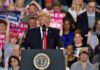
- Turning Point USA held an evening memorial at UVU’s UCCU Center, a privately organized event on university property with preregistration and heightened security.
- The university explicitly linked the closure to the anniversary and to community healing, not to regular academic scheduling.
- The memorial and counter-protests underscored the tension universities face between safety, viewpoint neutrality, and reputation after politically charged violence.
What UVU Did and Why It Matters
Utah Valley University announced it would cancel classes and close campus operations on the anniversary of Charlie Kirk’s killing, framing the day as one set aside for reflection, service, and connection. The university directly tied the decision to the one-year mark of the on-campus shooting, signaling that the closure was a memorial and recovery posture rather than a routine pause in instruction. In parallel, the school kept the UCCU Center open for a privately organized evening event—Turning Point USA’s tribute to Kirk—on the same campus, the same date, with doors opening mid-afternoon and the program beginning at 6:30 p.m..
Operationally, UVU’s plan combined a general shutdown with a controlled re-opening of a single venue for an outside group’s program. That hybrid is common in post-crisis campus management: administrators seek to reduce normal foot traffic and lower ambient risk while accommodating commemorative activity with screening, preregistration, and defined ingress/egress. Reporting documented preregistration requirements and an increased security presence around the memorial, consistent with contemporary threat-assessment practice after high-salience violence. UVU’s public language emphasized healing and community care, aligning with standard crisis-recovery framing adopted by higher education institutions in the aftermath of traumatic events.
How the Memorial Was Structured
The evening program—billed by Turning Point USA as “Freedom Built to Last Honoring Charlie Kirk”—was staged in UVU’s UCCU Center, the university’s multipurpose arena. TPUSA engaged the university to use the facility for a private event, a point UVU itself underscored in statements clarifying that the arena would remain open despite broader campus closure. That distinction mattered: it signaled that the university was facilitating space under a standard venue-use model rather than sponsoring the content of the memorial. The practical mechanics followed the familiar template for high-profile events on public campuses: advance registration, time-specific entry, and visible security protocols designed to separate attendees, credentialed staff, and demonstrators.
Same-day coverage confirmed that the memorial went forward as scheduled on the anniversary, with campus activity otherwise quieted by the cancellation of classes. The arena’s use as the focal point for remembrance concentrated movement and policing resources—an approach that simplifies command-and-control for campus security and local partners and helps manage both mourners and protesters in predictable zones.
Closure, Neutrality, and the University’s Role
UVU’s statements were explicit that the closure was about remembrance and healing after the shooting, not about endorsing any political message at the memorial. The university emphasized values that campus leaders routinely lean on in the wake of violence—reflection, service, connection—because they signal care for students and employees without adjudicating the honoree’s politics. In legal and governance terms, keeping a limited public forum (the arena) open for a private event while closing other operations tracks with well-established public university practice: institutions control time, place, and manner; they do not adjudicate content when facilities are rented under neutral policies.
That balancing act predictably draws scrutiny in polarized environments. Memorials for politically prominent figures tend to accrue counter-programming and protest, which in turn can shift coverage from the university’s healing frame to spectacles of conflict. Reports ahead of the anniversary referenced organized opposition and demonstrations, underscoring the routine friction universities face when facilitating events for partisan organizations while claiming institutional neutrality. The through-line is consistent with the broader research literature on campus commemoration disputes: these episodes often become proxy debates about institutional identity and inclusion rather than narrow logistics.
Security and Risk Management After Campus Violence
From a security practitioner’s perspective, UVU’s approach shows the influence of post-incident playbooks developed after tragedies at institutions like Virginia Tech and Northern Illinois University. Those frameworks stress threat assessment, layered access control, clear public communication, and the concentration of events into managed venues with predictable security perimeters. The operational choices visible here—canceling classes to reduce background density, preregistration to deter opportunistic disruption, and visible law enforcement presence—are all standard mitigations when the subject of an event has national political salience and the original crime scene is the campus itself.
Importantly, UVU separated two roles: custodian of a grieving campus community and landlord of a facility governed by viewpoint-neutral access rules. That separation is not cosmetic; it is the mechanism that allows a public university to honor loss, reduce ambient risk, and still comply with First Amendment and public-forum obligations when a private group meets rental criteria.
🔥ONE YEAR LATER: MEMORIAL HONORS CHARLIE KIRK AT UTAH VALLEY UNIVERSITY
A memorial now stands at the exact spot on Utah Valley University’s campus where Charlie Kirk was assassinated one year ago today in an attack attributed to a radical left-wing extremist. pic.twitter.com/rUD9EFSY4q
— Carolyn Sue Burgess (@SingerRoyale) September 11, 2026
What This Episode Teaches About Post-Tragedy Campus Governance
Three lessons emerge. First, calendar control is a powerful tool. By designating the anniversary as a day without classes and shuttering most operations, UVU created a calmer baseline for remembrance and security. Second, venue governance is policy, not ad hoc discretion. By explicitly labeling the UCCU Center gathering as a private event under a facility-use agreement, the university followed a neutral process rather than curating commemorative speech. Third, communication shapes legitimacy: the repeated emphasis on reflection and healing placed the university’s rationale on community well-being, not politics, even as outside groups and protesters pursued their own narratives.
None of this resolves the deeper cultural argument that often follows such tragedies—who is centered in campus space, what counts as appropriate remembrance, and whether institutional neutrality is possible when the honoree is a polarizing national figure. But as a matter of institutional practice, the evidence shows UVU executed a familiar, defensible play: decouple instruction from commemoration for a single day; concentrate activity in a managed venue; apply security and access protocols consistently; and communicate the purpose in terms of healing and service. On campuses that inherit the burden of violence, that is what functional governance looks like.
Sources:
youtube.com, deseret.com, heraldextra.com, upi.com, breitbart.com, abc4.com, nfpevents.tpusa.com, us.headtopics.com, diverseeducation.com, ope.ed.gov
© fixthisnation.com 2026. All rights reserved.