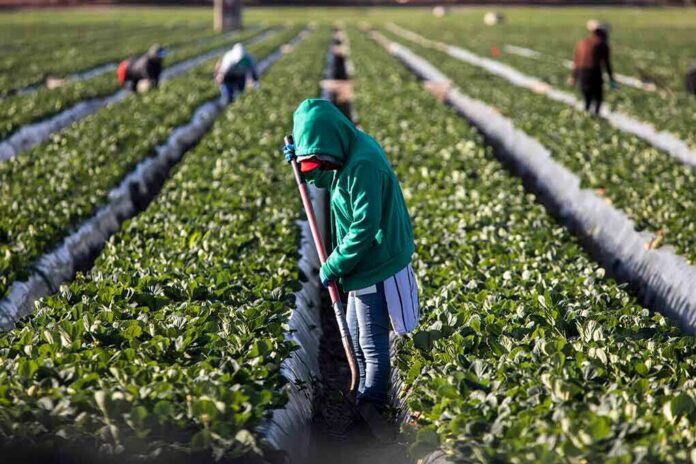
After a punishing run of input inflation, American agriculture is stabilizing in a hard-fought equilibrium: costs remain historically high, but producers are adapting with tighter cost control, more disciplined marketing, and targeted policy support—enough to keep many operations competitive, yet not enough to declare victory across the board.
The Short Version
- Farm production expenses remain elevated and are projected higher in nominal terms in 2026, confirming years of cost pressure.
- Adjusting for inflation softens the rise on paper, but cash costs for fuel, fertilizer, labor, and livestock purchases still bite at the farm gate.
- “Recovery” is uneven: row crops, proteins, dairy, and specialty crops face different margins and risk profiles.
- Producers are pushing back via input hedging, equipment and energy efficiency, direct-to-consumer sales, and strategic use of federal programs.
What has actually changed: the cost curve, not just the mood
The most important fact first: official projections show farm production expenses remain high and continue to edge upward in nominal dollars. USDA’s Economic Research Service (ERS) forecasts total farm sector production expenses at roughly $493 billion in 2026—about $21 billion more than the 2025 estimate. That is not a relief headline; it is confirmation that the post-2021 cost surge did not simply vanish. Farmers’ talk of “fighting back” is not about a windfall; it is about learning to operate profitably at a new, higher cost base and narrowing exposure to the most volatile line items.
Why the disconnect between “still high” and “turning the corner”? Part of it is arithmetic. ERS’s earlier 2026 outlook showed only a small nominal increase from 2025 and even a modest decline when adjusted for inflation, which matters for macro accounting but does not pay the diesel bill. At the level that determines whether a field gets planted or a barn expansion proceeds—cash out the door—fuel, fertilizer, and labor remain expensive, and livestock purchases are projected to be one of the largest and fastest-rising expense categories in 2026.
How farmers are pushing back: operating discipline and risk management
Producers have responded on the levers they can control. On inputs, more operations now forward-contract or pre-buy fertilizer and chemicals in shoulder seasons; they diversify suppliers to reduce single-vendor exposure; and they optimize application with variable-rate technology to lift nutrient-use efficiency. On energy, the spread of higher-efficiency tractors, smarter tillage passes, and on-farm fuel storage that allows buying dips has been decisive. Where labor is tight and costly, farms are adopting automation at the margin—grain cart guidance, auto-steer, robotic milkers in dairies—not to eliminate labor but to stretch it across more productive hours. These tactics do not erase price levels; they change unit costs and variability.
Marketing discipline is the second leg. With basis swings and futures volatility elevated, more growers are staging sales through the season, mixing forward contracts, hedges, and on-farm storage to capture carry when it exists. Protein producers, who buy a significant share of their feed, have leaned into ration reforms and basis management. The point is not financial wizardry; it is margin management—locking acceptable returns when they appear and avoiding the all-or-nothing bets that rising inputs can turn into existential risk.
Policy scaffolding: cushioning the blows without replacing the business
Federal programs have not neutralized cost inflation, but they have provided scaffolding where market shocks risk cascading into balance-sheet damage. ERS and allied analyses emphasize that expenses are structurally higher than pre-2021; nonetheless, targeted programs—whether ad hoc bridge assistance or the standing commodity safety net—have softened the worst cash-flow squeezes. Recent per-acre assistance rates for eligible commodities exemplify this function: partial offsets to narrow losses in seasons when input costs outrun prices, not permanent income replacement.
ERS’s midyear update underscored how dynamic the expense picture remains: relative to earlier 2026 forecasts, fuel and oil, fertilizer, and livestock purchases were marked higher—categories that directly hit both crop and protein producers. That revision alone helps explain why many farmers describe 2026 as stabilization rather than recovery; they are no longer in freefall, but the landing zone moved farther away than winter budgets implied.
One farm economy? In reality, several
It is a mistake to treat “farmers” as a single margin story. The cost-and-price puzzle diverges by sector. Row-crop budgets remain sensitive to fertilizer and diesel; proteins are acutely exposed to feed and livestock purchase costs; specialty crops carry labor and perishability risks that do not map neatly to grain charts. Even within row crops, regional basis patterns and input logistics yield widely different breakevens. ERS’s commodity cost-and-return data and university extension budgets for 2026–2027 show this heterogeneity clearly: some operations can pencil solid returns at trend yields; others need above-trend performance or price rallies to clear cash costs.
The result is a narrative that is not contradictory but layered: producers are “fighting back” with tools and discipline that work, yet the aggregate still shows a historically expensive cost structure. Investigations into the gap between prices paid and prices received—now near a decade high—capture the national tension succinctly: even when headline prices stabilize, the input stack can outpace revenue growth, compressing margins in ways that are invisible if you only read the top-line price series.
Mechanics of the squeeze: where the dollars go
Three mechanisms define the current squeeze. First, input concentration means a handful of firms dominate key segments like seed, crop protection, and fertilizer production; when shocks strike—geopolitics, natural gas prices, plant outages—pass-through can be swift and sticky. Second, energy prices cascade across the farm P&L: they raise direct fuel costs and the embedded energy in nitrogen fertilizers, freight, and drying. Third, capital costs rose with interest rates, increasing operating loan expenses and the carrying cost of inventory. ERS’s breakdown for 2026 spotlights the heft of livestock/poultry purchases, feed, and cash labor—line items that have proven stubbornly high relative to their pre-2021 baselines.
None of this makes farming unviable; it shifts the managerial frontier. The comparative advantage accrues to producers who can lower unit costs through agronomy and technology, secure more favorable input terms through timing and scale, and translate market volatility into planned cash-flow rather than windfall hope.
In today's Oval Office event, American Farm Bureau President @ZippyDuvall was there. As you can see below, he praised President Trump but he also offered this subtle comment:
“Of course, a lot of things that happen in agriculture is very difficult, very complicated. And some of… https://t.co/kiMwRngrp1
— Taylor Popielarz (@TaylorPopielarz) September 4, 2026
What resilience looks like from here
Looking ahead, two truths will coexist. In nominal terms, ERS expects expenses to remain high into 2026, with some categories rising faster than others; in real terms, year-over-year moves may appear flatter, which will reassure analysts more than it comforts operators. The practical playbook is clear: lock in affordable inputs early when possible, preserve working capital to buy opportunistically, maintain flexible rotations and rations to navigate relative price shifts, and keep marketing plans dynamic rather than calendar-fixed. The farms that treat these as systems, not one-off tactics, will not just endure the higher plateau—they will outperform on it.
Sources:
esmis.nal.usda.gov, ams.usda.gov, farmpolicynews.illinois.edu, ers.usda.gov, linkedin.com, fb.org
© fixthisnation.com 2026. All rights reserved.