The moment a New Jersey mom used an iPhone charger to save her newborn’s first minutes turned a routine drive into a gripping story about how real life, quick thinking, and a bit of American grit still win when it counts.
Story Snapshot
- A Jersey City couple delivered their baby on the New Jersey Turnpike at mile marker 113.3.
- The father and a state trooper used an iPhone charger to clamp the umbilical cord until medics arrived.
- The birth highlights how families and first responders handle rare roadside emergencies in a country hooked on hospital births.
<liBoth mom, Kristen Fast, and baby boy, Archer, were taken to the hospital and are healthy.
A highway becomes a delivery room in minutes
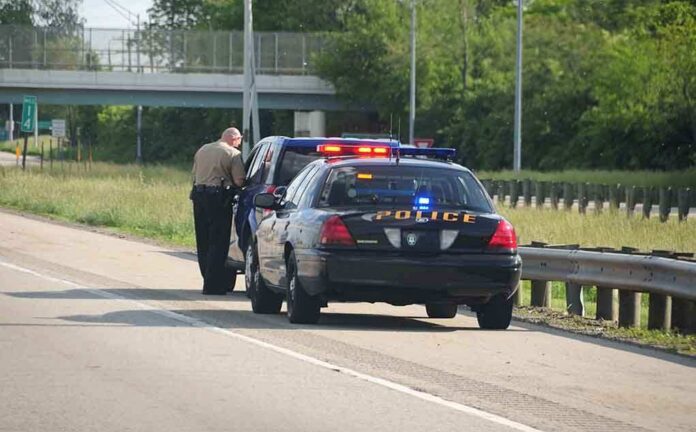
Kristen and Alex Fast were simply driving to the hospital on the New Jersey Turnpike when the clock ran out. Kristen went into labor around 12:20 p.m., and the contractions sped up faster than traffic. Near mile marker 113.3 on the eastern spur in Secaucus, their baby stopped being “on the way” and started being “right now.” Alex pulled over on the side of the highway, turning a strip of asphalt into a delivery room as their birth doula guided them by phone.
The birth certificate now lists New Jersey Turnpike Interstate 95, mile marker 113.3, as Archer William Fast’s official birthplace. That detail matters because it captures how sudden this was. This was not a planned home birth, not a birthing center, not even a parking lot. It was a live-labor emergency in a high-speed, high-risk place where truck noise, guardrails, and looming traffic replaced monitors and nurses.
A trooper, an iPhone cord, and seconds that mattered
As Alex tried to help Kristen deliver, New Jersey State Trooper Freddie Guacamaya responded to the 911 call and reached them at 12:41 p.m. By then, the baby was coming and there was no time to wait for an ambulance. Trooper Guacamaya put on gloves, helped guide the delivery, and Archer was born at 12:45 p.m. on the shoulder of the turnpike. This was reportedly the trooper’s first hands-on birth, but in that moment, he had to act like a seasoned medic.
Right after delivery, the family faced a problem most parents never think about on a highway: the umbilical cord. Medical staff on the phone told Alex he needed to clamp it quickly and to use anything like a string. He grabbed the only thing he had within reach—a simple iPhone charger cable—and used it to clamp the cord until emergency medical workers arrived. A passing truck driver even stopped to hand over towels, proving that regular people still step up when life is on the line.
From roadside chaos to a healthy baby boy
Emergency medical services soon arrived and transported Kristen and Archer to Hackensack University Medical Center, where doctors checked them both and confirmed they were healthy. Kristen later said her son is “a Jersey boy through and through,” and that you cannot get more Jersey than being born on the turnpike. The family’s wild afternoon did not even end there—they later found a flat tire when leaving the hospital and had to rely on Kristen’s parents for a ride home.
Trooper Guacamaya did more than just help with the birth. He drove the family’s car to the hospital himself and has stayed in contact with the Fasts since, planning to visit Archer again. That kind of follow-through matters. It shows how first responders often see people at their worst and most scared, and then choose to stay invested after the sirens are off. For many conservatives who value service, duty, and local community, that is exactly the kind of policing they want more of, not less.
Where this wild birth fits in the bigger birth picture
This highway delivery feels like a one-in-a-million story, but it fits inside a larger trend. In the United States, out-of-hospital births make up a small yet growing share of all deliveries. In 2010, about one in eighty-five babies was born somewhere other than a hospital, with most of those births at home and a smaller share in birth centers or “other locations” like cars, parking lots, and yes, highways. Roadside births remain rare, but they are not unheard of.
Many parents today feel caught between two extremes. On one side, they see over-medicalized hospital births, where interventions and inductions sometimes stack up even when mother and baby are low risk. On the other, they see stories of natural or home births that can go fine but might become dangerous if trouble starts and help is far away. The Fast family’s experience offers a different lesson: sometimes nature decides the birth setting, and then skill, courage, and quick response determine how it ends.
What this story says about risk, readiness, and common sense
Some might look at the iPhone cord and wince, wondering about germs or best practices. That concern is fair, but the outcome here speaks loudly: the baby is healthy, the mom is healthy, and the improvised clamp worked long enough for professionals to take over. When you line that up against common-sense conservative values, this story reflects something many people trust—responsible risk-taking guided by practical know-how and backed by responsive public servants.
Quick-thinking NJ State Trooper delivers a baby on the Turnpike! 🚔👶
Kristen Fast was rushing to the hospital when little Archer decided he couldn't wait, born right at mile marker 113 on the NJ Turnpike in Secaucus
Trooper Freddie Guacamaya jumped in, gloves on, & helped… https://t.co/WRxiWkT4zB pic.twitter.com/Jq0giMbGEg
— Wake Up NJ 🇺🇸 New Jersey (@wakeupnj) July 11, 2026
This birth also reminds us that no matter how advanced medicine becomes, there is no way to rule out sudden, messy, real-world events. Phones lose signal. Traffic jams happen. Babies come fast. Prepared families and strong first responder networks make the difference. The Fasts listened to their doula, trusted their instincts, and leaned on a state trooper who stepped into a job he had never done before. The result is a healthy child whose very birthplace tells a story about modern America under pressure—and how, sometimes, we still get it right.
Sources:
nypost.com, people.com, nj.com, facebook.com, pmc.ncbi.nlm.nih.gov, nationalpartnership.org, journalofethics.ama-assn.org
© fixthisnation.com 2026. All rights reserved.