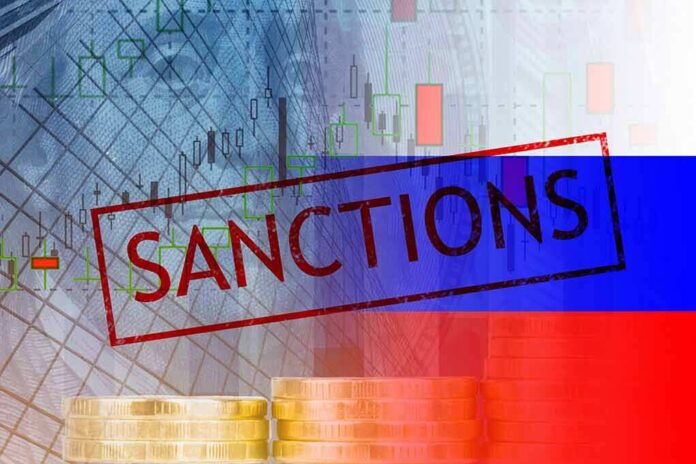
Economic pressure on Russia has shifted from punishing Moscow directly to targeting the foreign cash flows that sustain its war machine, and the Senate’s new sanctions framework is the clearest expression of that strategy to date.
Key Points
- The Lindsey O. Graham Sanctioning Russia Act of 2026 concentrates on Russia’s core revenue streams—oil, gas, finance, defense, and the “shadow fleet” that moves sanctioned crude.
- Its most distinctive feature is secondary pressure on the five largest foreign buyers and sanctions evasion partners, with authority for tariffs up to 100% on their Russian energy-linked imports.
- Bipartisan backing in the Senate is unusually broad, reflecting a consensus that energy revenue is the Kremlin’s critical vulnerability rather than a peripheral target.
- The bill’s impact nonetheless hinges on presidential discretion, waiver use, and whether major buyers like China and India adjust purchases or find workarounds.
From Direct Sanctions to Revenue-Centric Pressure
To understand why this bill matters, you have to see it as the latest iteration of a long campaign, not a one-off gesture. For more than a decade, each escalation in Russia’s aggression—Crimea, election interference, the full-scale invasion of Ukraine—has triggered new U.S. sanctions tranches. The early waves focused on obvious levers: Russian banks, state-owned enterprises, selected oligarchs, and parts of the energy sector. Those measures signaled Western resolve and complicated Russia’s access to capital, but they did not stop the war; Moscow continued to fund its military by leaning heavily on hydrocarbon exports.
The Lindsey O. Graham Sanctioning Russia Act of 2026 is built around that hard-earned lesson. Its sponsors explicitly describe the legislation as designed to choke off the “vast majority” of Russia’s war financing, which they attribute to oil and gas receipts. Rather than adding more names to sanctions lists alone, the bill moves upstream and downstream: upstream to Russian production, transport, and finance; downstream to the foreign buyers whose payments keep the system running. This is an attempt to treat Russia’s war machine as a revenue-dependent system and to attack its cash flow, not simply its assets.
What the Bill Actually Does to Russia’s Economy
The bill is comprehensive in scope, but its core architecture is straightforward. First, it expands primary sanctions on Russian actors themselves. The text and sponsor statements describe full blocking measures on broad sectors of the Russian economy—energy, finance, defense, industrial base, and key oligarch-linked entities—alongside sanctions on Russian officials and military figures, including President Vladimir Putin. These measures aim to cut Russian entities off from U.S. capital, technology, and services, continuing the banking and energy restrictions that Congress first strengthened with the 98–2 sanctions vote in 2017.
Second, the legislation targets Russia’s sanctions-evasion infrastructure, especially the “shadow fleet” of tankers used to move crude outside normal compliance channels. By striking vessel owners, insurers, and port-dependent operations, senators are trying to make it more difficult and more expensive for Russia to reroute oil around existing restrictions, a problem that earlier packages only partially addressed.
Third—and most novel—the bill introduces a narrowly tailored secondary-tariff regime aimed at the foreign buyers that matter most for Russia’s export revenue. The text authorizes tariffs up to 100% on imported goods from the five largest importers of Russian crude oil and the five largest importers of Russian natural gas, as well as the top five countries that facilitate Russia’s energy sanctions evasion. China and India, which legislative materials and outside commentary identify as dominant purchasers of Russian energy, are explicit targets. The logic is simple: if you raise the cost of Russian oil and gas high enough in those markets, buyers either reduce purchases, seek alternative suppliers, or absorb substantial economic pain for continuing to fund Russia’s war.
Exemptions, Waivers, and the Fine Print
Pressure of this kind is never applied in a vacuum; it runs through alliances and global energy markets. The Senate bill therefore includes a set of exemptions and waiver authorities that both enhance its diplomatic viability and complicate its bite. Countries that import less than 15% of Russia’s total natural gas exports and are actively reducing those imports are exempt from the tariff provisions. That carve-out protects core allies like France and Japan, whose energy systems are still partially intertwined with Russian supply but moving away from it, and reflects the political reality that broad-brush tariffs on dozens of countries would fracture coalitions.
At the same time, the bill gives the President authority to waive sanctions or tariffs upon certification to Congress that doing so is in the U.S. national interest. This is a standard feature of modern sanctions law; presidents need flexibility to manage crises and trade-offs. Yet it is also the source of one of the most serious critiques: the bill’s most powerful economic lever—punishing third-country buyers—is tied to presidential discretion, not automatic triggers. The statute says the President may impose tariffs up to 100% on qualifying imports, not that he must. That means everything from timing to targeting depends on the White House’s appetite for confrontation with China, India, Turkey, and others.
Bipartisan Consensus and Political Signaling
Congressional politics around Russia sanctions have their own rhythm. When the Senate passed its 2017 package by margins of 97–2 and 98–2, observers noted both the substantive tightening of constraints and the symbolic message: lawmakers were reclaiming control over Russia policy from the executive and locking in penalties that a president could not easily unwind. The Graham bill follows that tradition. It carries more than 60 cosponsors, evenly divided by party, with some reports citing support from over 80 senators. Senior figures on the Foreign Relations Committee and both party leaderships have framed it as one of the most severe sanctions packages Congress has ever considered against Russia.
This breadth of support matters for two reasons. First, it signals to Moscow, Beijing, and other capitals that the United States is institutionally committed to economic pressure as part of its Russia policy, not merely engaged in an experiment tethered to one administration. Second, it underpins enforcement credibility; foreign firms and governments are likelier to take threats of secondary sanctions seriously when they see that Congress stands ready to reassert itself if a president tries to weaken implementation again.
The Strategic Bet: Can Energy Sanctions Cripple the War Machine?
Behind the legal language sits a strategic bet. Senators and outside advocates argue that Russia’s war in Ukraine is financed “almost entirely” by oil and gas money, and that cutting those flows will do more to constrain the Kremlin’s ability to sustain high-intensity warfare than incremental battlefield restrictions. This is not an unreasonable view. Russia’s federal budget is structurally dependent on hydrocarbons, and discounts it offers to maintain market share under earlier sanctions do erode margins.
However, the public record surrounding this bill stops short of providing rigorous quantitative backing for the claim that its measures would reduce Russian revenue by a specific, material amount. There is no Treasury-style model released with the legislation that translates 100% tariffs on top buyers into projected declines in Russian export volumes, price shifts, and net budget impact. Nor is there an official before-and-after analysis of previous sanctions packages demonstrating that financial measures alone degraded Russia’s battlefield capacity in a verifiable way. The logic is structural and plausible, but it has not yet been documented in the kind of economic detail that would settle the argument.
Critics focus on that gap. They point out that Russia has repeatedly adapted to sanctions by rerouting trade through intermediaries, offering increased discounts, and leveraging non-Western demand. If China and India decide that maintaining access to cheap Russian energy is more important than avoiding U.S. tariffs, they may simply absorb some of the cost, bargain for better terms, or shift purchases through shadow channels. The Senate itself anticipates this dynamic by including sanctions aimed at countries and entities that facilitate sanctions evasion, which is an admission that enforcement will be contested.
Discretion, Enforcement, and the Role of the White House
The strongest factual counterweight to the bill’s ambitions is not that sanctions do nothing—it is that their success is contingent. Executive discretion runs through every operational hinge. Congress can set the framework, but whether tariffs are imposed promptly, how aggressively secondary sanctions are pursued, and how many waivers are granted will depend on the President’s risk tolerance and strategic priorities. Even supporters acknowledge this; one of the most prominent outside advocates, Sir Bill Browder, has said flatly that “if Trump implements it, then Putin’s in deep trouble,” underscoring that implementation, not passage, is the decisive step.
This creates a vulnerability in both directions. A future president who wants to de-escalate with Russia or avoid confrontation with China and India can slow-walk determinations, minimize tariff levels, or broaden waiver use, bluntly reducing the bill’s impact without repealing it. Conversely, a president who is determined to drive Russian revenue down may face pushback from allies and domestic constituencies worried about energy prices, supply shocks, or diplomatic fallout. That interplay between statutory authority and political will is where sanctions live or die.
Why This Bill Is Still a Significant Breakpoint
Even with those caveats, the evidence supports a clear judgment: the Lindsey O. Graham Sanctioning Russia Act represents a meaningful escalation in how the United States tries to grind down the Kremlin’s war machine. It concentrates on Russia’s dominant revenue sources, extends pressure to the foreign buyers that keep those revenues flowing, and hardens constraints on sanctions evasion infrastructure like the shadow fleet. Its bipartisan support and alignment with Ukrainian requests for economic measures alongside military aid reinforce its political weight.
What remains uncertain is the magnitude of its effect. The bill does not, by itself, guarantee a collapse in Russian export income or an abrupt shift in battlefield dynamics. Its success will depend on detailed implementation choices by the executive branch, the responsiveness of major buyers, and the ability of Russia and its partners to innovate around constraints. Previous sanctions rounds did not end the war, and critics are right to be skeptical of claims that the next package will do so on its own. But they have not produced data demonstrating that the new secondary-tariff model is doomed to fail; structurally, it closes loopholes that earlier measures left open.
For serious observers, then, the question is no longer whether sanctions should target Russia’s energy revenue—that debate is effectively settled by the breadth of support behind this bill. The real analytic work lies in tracking how foreign buyers respond, how rigorously tariffs and secondary sanctions are enforced, and how Russia adjusts its budget and military tempo when its largest revenue channels face sustained, coordinated pressure. Those are empirical questions. This legislation ensures they will be asked, and that the answers will have consequences far beyond Moscow.
“The Senate voted overwhelmingly, 86-12, in support of moving one of the most severe sanctions packages against Russia forward. It’s time for Vladimir Putin to pay for the death, destruction and devastation he’s sowing across Ukraine and around the world.”- @SenatorShaheen https://t.co/jlBmCPaNZO
— Senate Foreign Relations Committee (@SFRCdems) July 29, 2026
Future Lines of Assessment
Looking ahead, three strands of evidence will determine whether this approach becomes a durable template for economic warfare or a cautionary tale. First, trade and customs data from China, India, Turkey, and other named buyers will show whether Russian oil and gas volumes truly fall under sustained tariff pressure. Second, maritime analytics on the shadow fleet—ownership changes, insurance availability, port access, and routing patterns—will reveal whether evasion capacity has been materially constrained. Third, Russia’s own budget disclosures and military spending patterns will indicate whether revenue shocks translate into reduced war-fighting capability or are offset by cuts elsewhere.
Congress has built the scaffolding to test the proposition that targeting buyers, rather than only the seller, can grind down a war machine powered by exports. Whether that scaffolding supports real strategic weight will depend on choices made in the years after the bill’s passage, not just on the vote that created it.
Sources:
foxnews.com, foreign.senate.gov, wsj.com, cnn.com, politico.com, congress.gov, lgraham.senate.gov, abcnews.com, en.wikipedia.org, mezha.net, thehill.com
© fixthisnation.com 2026. All rights reserved.