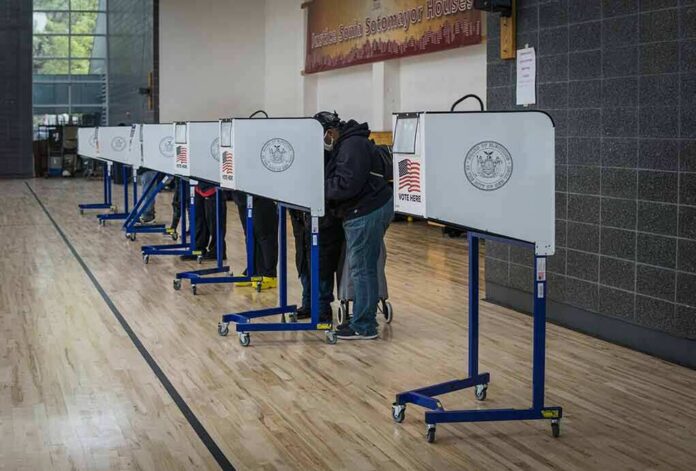
When federal prosecutors ask a court to pause the counting of ballots already in the mail, they are not merely alleging wrongdoing; they are testing the legal and technical machinery that separates election safeguards from voter disruption.
The Short Version
- Justice Department and Homeland Security said they identified more than 20,000 “likely noncitizens” on California voter rolls and sought a court order to set aside related mail ballots pending verification.
- California rejected the request, arguing the federal government offered inadequate evidence and that the National Voter Registration Act restricts systematic list actions close to an election.
- The federal filing seeks temporary verification before tabulation, not wholesale disenfranchisement, but offers few public details on matching rules or error rates.
- The heart of the dispute is reliability and timing: how confident must a match be to justify intervention, and what the NVRA permits inside the 90‑day “quiet period”.
What the lawsuit actually asks for
The Department of Justice filed suit in federal court seeking an order to segregate vote-by-mail ballots linked to more than 20,000 registrants the government characterized as “likely noncitizens,” and to count none of those ballots until citizenship status is verified. DOJ says the list resulted from a joint DOJ–DHS comparison of California voter files with federal data, not from a single whistleblower or rumor. In its framing, the ask is procedural—hold and verify—rather than a declaration that each person is ineligible. That narrowness matters in court; it signals the government is pressing for a prophylactic check targeted at a defined cohort before tabulation, not a sweeping purge.
California officials refused to implement those steps, disputing both the sufficiency of the evidence presented and the legality of making such changes close to a federal election. The standoff produced the lawsuit: federal authorities asked a judge to compel short-fuse verification; state officials asked to be left to administer the election under existing law.
The counter-case: evidence sufficiency and the NVRA’s timing rules
California’s Secretary of State said DOJ had not provided evidence that the people on the federal list were noncitizens and criticized the utility of the materials transmitted, arguing they lacked the detail and functionality necessary for county-level investigations. That critique goes to the core reliability question: absent person-level substantiation or disclosed matching logic, it is difficult for administrators to separate a legitimately identified ineligible registrant from a false positive produced by stale immigration records, duplicate names, or recent naturalization.
The state also pointed to the National Voter Registration Act’s 90-day “quiet period,” which limits systematic programs to remove names from voter lists shortly before a federal election. Courts have long wrestled with that provision: it aims to prevent last-minute errors that could knock eligible voters off the rolls, yet it cannot immunize truly ineligible registrations discovered late. Recent briefs and federal filings underscore that the quiet period applies to systematic removals; it does not create an absolute ban on all administrative action near an election, but it does heighten scrutiny on timing and method.
How these lists are built—and why error rates dominate the dispute
Cross-database identity resolution sounds simple—match a name and date of birth across files—but in practice it is fraught. Immigration and naturalization statuses change; records may be incomplete or out of sync across agencies; common names create ambiguity. Election research and technical literature emphasize the risk of false positives when jurisdictions link voter registration files to other administrative datasets using imperfect identifiers. The result is predictable: some fraction of any “likely noncitizen” list will be eligible citizens wrongly flagged by outdated or mismatched records.
That is why the federal government’s choice of qualifiers—“likely noncitizens”—is more than rhetoric. It telegraphs probabilistic classification. For courts, the operative questions become: What sources underlie the probability? How recent are they? What is the estimated false-positive rate, and what due-process steps will separate the signal from the noise before a ballot is rejected? The DOJ’s public filings describe the joint effort but do not disclose the matching rules or an error-rate analysis, leaving the evidentiary heft of the 20,000-plus figure contested in the public record.
What the NVRA’s quiet period does—and does not—cover
Section 8(c)(2) of the NVRA requires states to complete “any program the purpose of which is to systematically remove” ineligible registrants at least 90 days before a federal election. The provision curbs mass list maintenance in the final stretch, when errors are hardest to fix. But it has never been a blanket embargo on all eligibility checks; individualized removals for cause and post-registration verifications tied to concrete evidence have coexisted with the statute. That is the seam DOJ is attempting to occupy—arguing that segregating specific ballots pending verification is not a prohibited systematic purge, while California characterizes the federal request as, in substance, a large-scale program prohibited by the timing rule.
Appellate and Supreme Court filings in recent cycles reflect this nuance: the quiet period constrains timing and process rather than barring every action. The closer a remedy looks like a mass program keyed to probabilistic flags, the more it resembles what the statute forbids. The more it resembles individualized, evidence-backed adjudications, the likelier it is to survive. The government’s case will stand or fall on where a judge locates its request along that spectrum.
Surprise surprise! The DOJ's California numbers keep shrinking.
You see, earlier this year, Trump's DHS said it "identified" 190,000 potential noncitizen voters in California.
This figure is far above the 20,000 number on the list that the DOJ gave California this week, which… pic.twitter.com/uhtZ7P1t4q
— Eric Jay (@EricinAmericaX) October 23, 2026
What would resolve the core questions
The technical and legal issues are separable but intertwined. On the technical side, confidence requires three disclosures: the matching methodology and fields used, the provenance and freshness of the underlying federal data, and an audit-caliber estimate of false positives. Without that, a court lacks a principled basis to weigh the risk of disenfranchising eligible voters against the risk of counting ineligible ballots. On the legal side, clarity rests on whether segregating and verifying this defined cohort constitutes a prohibited “systematic program” under the NVRA or a permissible, targeted safeguard tailored to a federal interest in regulating who may vote in federal elections.
How to judge the stakes, beyond the headlines
Set aside the political theater and anchor on first principles. Noncitizen voting in federal elections is illegal; any credible evidence of it warrants investigation. But elections run on process as much as principle. Near Election Day, every intervention must survive two filters: accuracy high enough to justify the intrusion, and legality precise enough to avoid creating new errors while trying to correct old ones. The DOJ has put a legally cognizable and procedurally narrow request before a court; California has raised substantive questions about evidence sufficiency and statutory timing. The outcome will not turn on who shouted loudest, but on whether the government can show its list is accurate enough—and its remedy tailored enough—to fit within the NVRA’s guardrails while protecting eligible voters from avoidable harm.
Sources:
nypost.com, justice.gov, politico.com, washingtontimes.com, abc7news.com, sos.ca.gov, davisenterprise.com, foxnews.com, electionlab.mit.edu
© fixthisnation.com 2026. All rights reserved.