When a campaign crosses the line from sharp elbows to manufacturing a crime scene, it stops being politics and becomes a felony case; that is the bright line federal prosecutors say a Missouri House candidate crossed in an alleged plan to plant cocaine and Adderall on his primary opponent.
The Short Version
- Federal prosecutors charged Thomas Ross with conspiracy to distribute a controlled substance tied to an alleged scheme to frame his opponent, Louise Secker.
- A former campaign manager reportedly alerted police, turned over drugs, and provided texts described in court filings as instructions for the plant.
- Authorities say field tests identified the substances as cocaine and Adderall; the allegation is now in federal court, not the court of public opinion.
- The case fits a long history of election “dirty tricks,” but this one is unusual for its alleged use of contraband and direct involvement of a candidate.
What prosecutors say happened and the evidence they cite
According to charging documents described by multiple outlets, Thomas Ross, a candidate for the Missouri House, has been charged with conspiracy to distribute a controlled substance. The core allegation is stark: Ross asked his then–campaign manager to place a small quantity of cocaine and a prescription amphetamine pill on his opponent, Louise Secker, in the heat of a primary contest. The Associated Press reports the federal charge and the alleged objective of the scheme plainly: to plant drugs and thereby damage an opponent’s reputation and candidacy.
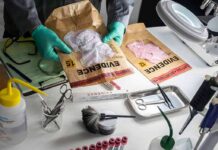
The account does not rest on rumor. The Kansas City Star reports that Ross’s former campaign manager contacted the Joplin Police Department and later provided federal investigators with both the purported planting materials and text messages that prosecutors say captured Ross’s directives. In that reporting, the aide—identified by the initials C.S. in court documents—turned over a nylon glove containing powder cocaine and a 20-milligram Adderall tablet and supplied messages that, according to the paper’s description of the filings, instructed him to place the items on Secker. A local account adds that presumptive field tests turned a test kit blue for cocaine and identified the amphetamine pill as Adderall XR 20 mg, a Schedule II controlled substance.
Why the charge is conspiracy, not simply “dirty politics”
Conspiracy to distribute a controlled substance is a federal crime that hinges on agreement and an overt act toward unlawful distribution—here, prosecutors allege a plan to place Schedule II substances on an unsuspecting target. Distribution in federal law is broader than street sales; the unlawful transfer or attempted transfer of possession qualifies. On the facts reported, prosecutors are not theorizing reputational harm alone. They are alleging the use of contraband as an instrument, and that moves the conduct into a well-established criminal framework. That the case arrives attached to an election is incidental to the elements; the core is the agreement and steps taken with illegal drugs.
Text messages often serve as the spine of contemporary conspiracy cases; they memorialize intent in the principals’ own words. The Star’s account of messages from Ross to C.S. requesting the plant is significant because it speaks to direction and purpose, not mere venting or bluster. Physical evidence—the glove, the powder, the pill—gives investigators something to test and trace, including fingerprints, DNA, or sourcing. Field tests are presumptive, not dispositive, but they frequently inform probable cause to arrest while more rigorous laboratory analysis proceeds; the local reporting specifically notes a positive presumptive test for cocaine and visual identification of the Adderall capsule.
How such a case is built: materials, communications, and chain of custody
Federal investigators typically triangulate three categories of proof in matters like this: communications, corroborating witnesses, and physical evidence. Communications establish planning and intent; a cooperating aide can authenticate authorship and context. Physical evidence confirms the object of the scheme and its legal status—here, controlled substances. The chain-of-custody record, from the moment C.S. surrendered the items to law enforcement through forensic testing, becomes part of the evidentiary backbone. While public reporting does not reproduce lab reports, the narrative described to date accounts for initial testing, recovery of materials, and the messages prosecutors say describe the planned plant.
Timing matters in election-adjacent crimes. The Star reports the aide contacted police less than a week before an arrest, a window that suggests investigators moved quickly once they had both the items and the communications. Swift action is common when contraband and an imminent target are in play; the priority becomes preventing harm while preserving evidence.
Context: where this fits in the long tradition of campaign “dirty tricks”
American elections have endured dirty tricks since long before Watergate—whisper campaigns, forged documents, manufactured scandals. What makes the Ross case unusual is the alleged operational detail and the use of illicit drugs as the vector. Election-law scholar Richard Hasen has argued that modern dirty tricks are amplified by speed and scale through digital channels, compressing the time between allegation and public judgment. The Brennan Center has documented how deceptive tactics and manufactured claims can outrun institutional correction during election cycles, shaping perceptions before facts are fully adjudicated.
Not every unethical tactic is criminal; many live in the gray zone of sharp-elbowed politics. But manufacturing incriminating evidence with controlled substances crosses an unmistakable statutory boundary. It is closer to planting a gun than spreading a rumor. That distinction—conduct that creates criminal exposure independent of any election law—explains why this matter sits in federal court instead of a campaign-ethics file.
What to watch procedurally
From here, several processes typically unfold. First, forensic confirmation of the substances through a certified laboratory often follows an initial field test; lab confirmation tightens the evidentiary record supporting the controlled-substance element. Second, digital forensics on devices allegedly used to send the messages can authenticate metadata, timestamps, and authorship. Third, prosecutors may seek to corroborate the cooperating aide’s account with additional witnesses or records—who supplied the drugs, who handled them, and whether any third parties were enlisted. The defense, for its part, can challenge intent, authorship, or the credibility of the cooperating witness.
The legal reminder endures: a charge is an allegation, not a conviction. But the public description of evidence—a cooperating insider, contemporaneous messages, and recovered contraband—reflects the kind of multi-pronged proof federal prosecutors prefer to bring when the stakes include both liberty and an election’s integrity.
MISSOURI REPUBLICAN THOMAS ROSS CHARGED IN ALLEGED DRUG-PLANTING PLOT
A Republican candidate for Congress in Missouri is facing federal drug charges.: “Thomas Ross, who is running in Missouri's 161st House district, is charged with conspiracy to distribute a controlled…
— Worldwide News Network (@WorldwideNNX) September 3, 2026
Why this matters beyond one race
Democracies tolerate bruising contests; they cannot tolerate fabricated criminality as a campaign tactic. When a candidate allegedly tries to engineer a drug bust against an opponent, it weaponizes the justice system itself, conscripting police as unwitting participants. That harms more than a rival; it erodes citizen confidence that victories are earned, not manufactured. The deterrent function of prosecutions in this space is not a theoretical aspiration—it is how the system signals that some lines are bright and enforced. The Ross case, as reported, is a stark example of drawing that line in ink.
Sources:
cbsnews.com, apnews.com, casetext.com, kcur.org
© fixthisnation.com 2026. All rights reserved.