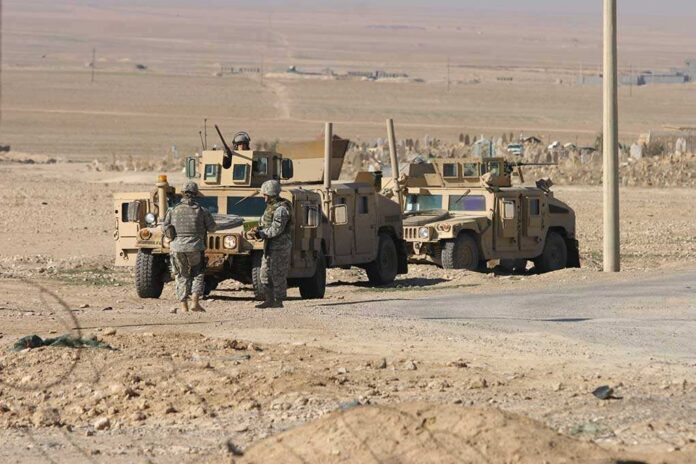
Warships, cargo planes, and a **Marine general** are now in Venezuela, as the United States rushes a major military-backed relief mission after two devastating earthquakes.
Story Snapshot
- The United States military has deployed hundreds of troops, ships, and aircraft to help Venezuela after deadly quakes.
- A U.S. Marine Corps major general is running a new relief headquarters at the main Caracas airport.
- The USS Fort Lauderdale is serving as a key medical, communications, and aid hub off Venezuela’s coast.
- The Trump administration pledged $150 million in aid and says U.S. forces will leave when the job is done.
U.S. Launches Large-Scale Military Relief Mission to Quake-Hit Venezuela
U.S. Southern Command announced that American military forces surged into Venezuela to support the U.S. government’s relief operations after two powerful earthquakes struck on June 24, 2026. The Trump administration says this mission is focused on saving lives, moving aid, and restoring basic services in hard-hit areas. The Department of State requested the unique skills of the U.S. military, including heavy airlift, logistics, medical support, and satellite imagery, to back up disaster teams already on the ground.
Reporting from Washington shows the U.S. military now has more than 900 service members inside Venezuela, with about 800 more in staging hubs in Puerto Rico and Curaçao to support relief operations. General Francis Donovan, who commands U.S. Southern Command, said these forces are focused on search and rescue, airport repairs, air and naval traffic coordination, and moving humanitarian supplies into the country after the quakes. He stressed this is not a permanent deployment and said, “We leave when we’re done.”
Marine General Takes Charge of Relief Hub in Caracas
To keep this large mission organized, a **Humanitarian Assistance Coordination Center** has been set up at Simón Bolívar International Airport, just outside Caracas. U.S. Marine Corps Major General Kevin J. Jarrard is directing the center, which manages U.S. military support to Venezuelan relief efforts and keeps constant contact with the Government of Venezuela, American diplomats, allied nations, and aid groups on the ground. This hub helps control flight operations, aid deliveries, and security at the airport, which is vital for bringing in rescue teams and supplies.
A U.S. Marine combat logistics company has also arrived in Venezuela, bringing medium transport trucks, off-road vehicles, and military ambulances to move people and cargo across damaged roads. U.S. Southern Command says these assets are meant to “build capacity” and speed up the flow of vital supplies into communities that were hit hardest by the earthquakes. A forward arming and refueling point has been set up at the airport so nearly a dozen helicopters can quickly refuel and turn around for medical evacuations, personnel moves, and heavy sling-load missions into remote areas.
Warships, Aircraft, and Aid: How the Mission Works
The amphibious transport dock **USS Fort Lauderdale** is berthed at La Guaira Port, near Caracas, and is serving as a critical communications and distribution center as well as a medical support platform for the relief effort. U.S. Southern Command says the ship provides extra medical capability, secure communications, and a strong base to receive and sort aid before it goes inland. The littoral combat ship **USS Billings** is also supporting the mission offshore by providing helicopter operations that help reach areas cut off by quake damage and poor roads.
U.S. Air Force C-17 and C-130 cargo planes are flying urban search-and-rescue teams and equipment into Caracas to help locate survivors trapped in collapsed buildings. U.S. forces have been delivering water, food, and other relief supplies through Simón Bolívar International Airport while also running airfield management, air traffic coordination, and communications tasks there. The Trump administration says U.S. Space Force satellite imagery is being used to assess damage and plan where aid should go first, so limited resources reach the people in greatest need.
State Department-Led Aid, Cost, and Open Questions
The U.S. State Department is formally leading the response and has deployed a Disaster Assistance Response Team with more than 250 specialists, including three urban search-and-rescue teams, to carry out life-saving missions. A State Department humanitarian official stated on social media that the United States will send search and rescue teams, medical supplies, and other humanitarian goods in the crucial first days after the disaster, working with Venezuela’s interim authorities. Ground reporting says Washington has pledged about **$150 million in emergency aid** and is providing Starlink satellite internet service to keep communications running in stricken areas.
Meet Tsunami.
Tsunami is a nine year old Border Collie. His final search and rescue mission followed two powerful earthquakes that struck Venezuela just 39 seconds apart on June 24. The magnitude 7.2 and 7.5 quakes caused nearly 800 buildings to collapse trapping many people… pic.twitter.com/giWXMZjhoZ
— Massimo (@Rainmaker1973) July 2, 2026
Some key details remain unclear. Different outlets report different death tolls from the earthquakes, and there is no single, official number from Venezuela or the United Nations yet, showing how hard it is to track casualties in the middle of a major disaster. The exact number of U.S. troops has not been fully detailed by official military statements, even as outside reports describe “hundreds” or “more than 900” personnel involved. There is also no public document showing the precise legal request from Venezuela for U.S. military help, and no firm end date beyond commanders saying the forces will depart once relief tasks are complete.
Sources:
taskandpurpose.com, azrscorp.com, conservativenewsdaily.net, slguardian.org, southcom.mil
© fixthisnation.com 2026. All rights reserved.